Pricing and Planning
How Much Does a Kitchen Backsplash Cost in the Charlotte Area?
Kitchen backsplash pricing depends on more than square footage. This guide explains CBC's backsplash installation ranges, what affects cost, what is included, and how Charlotte-area homeowners should compare quotes.
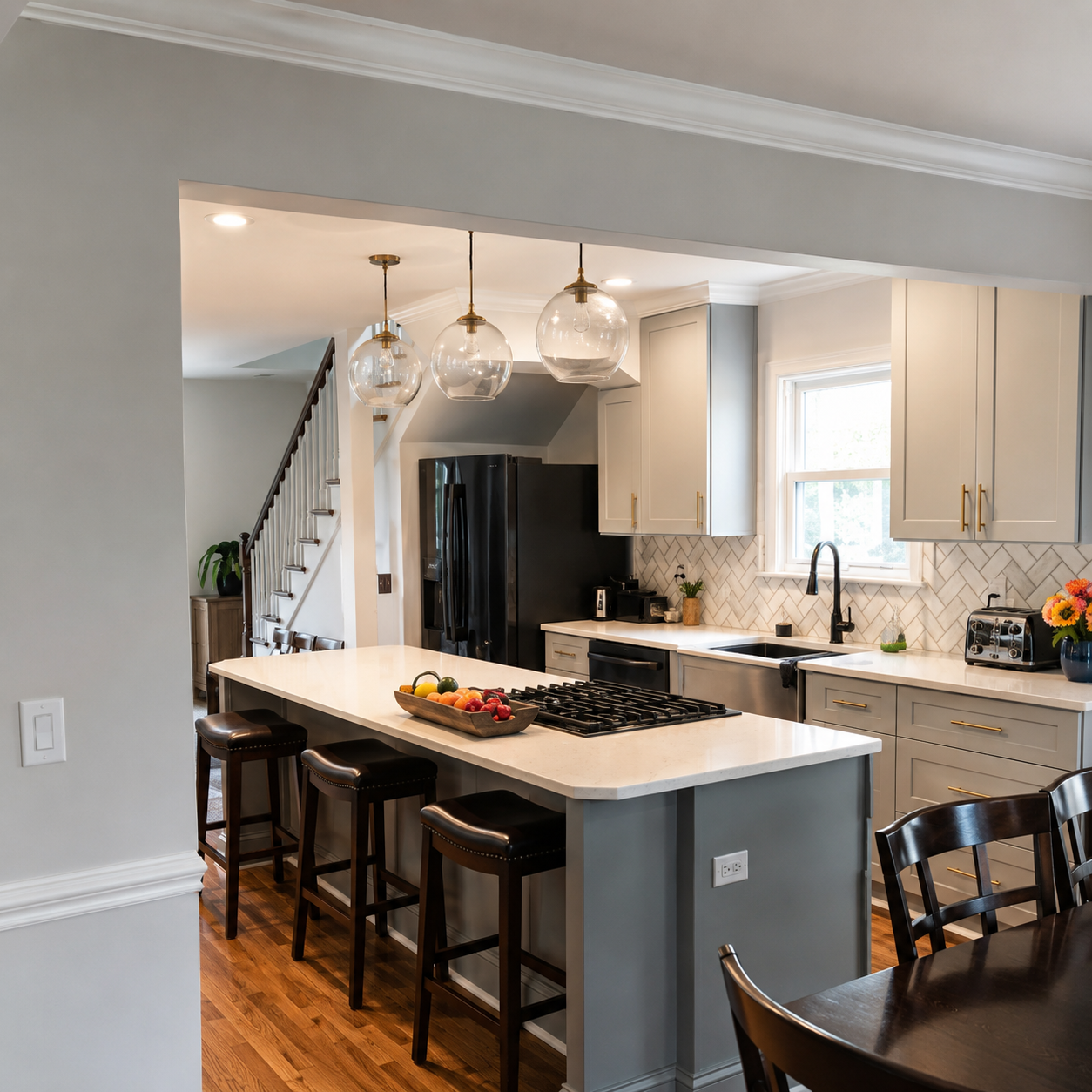
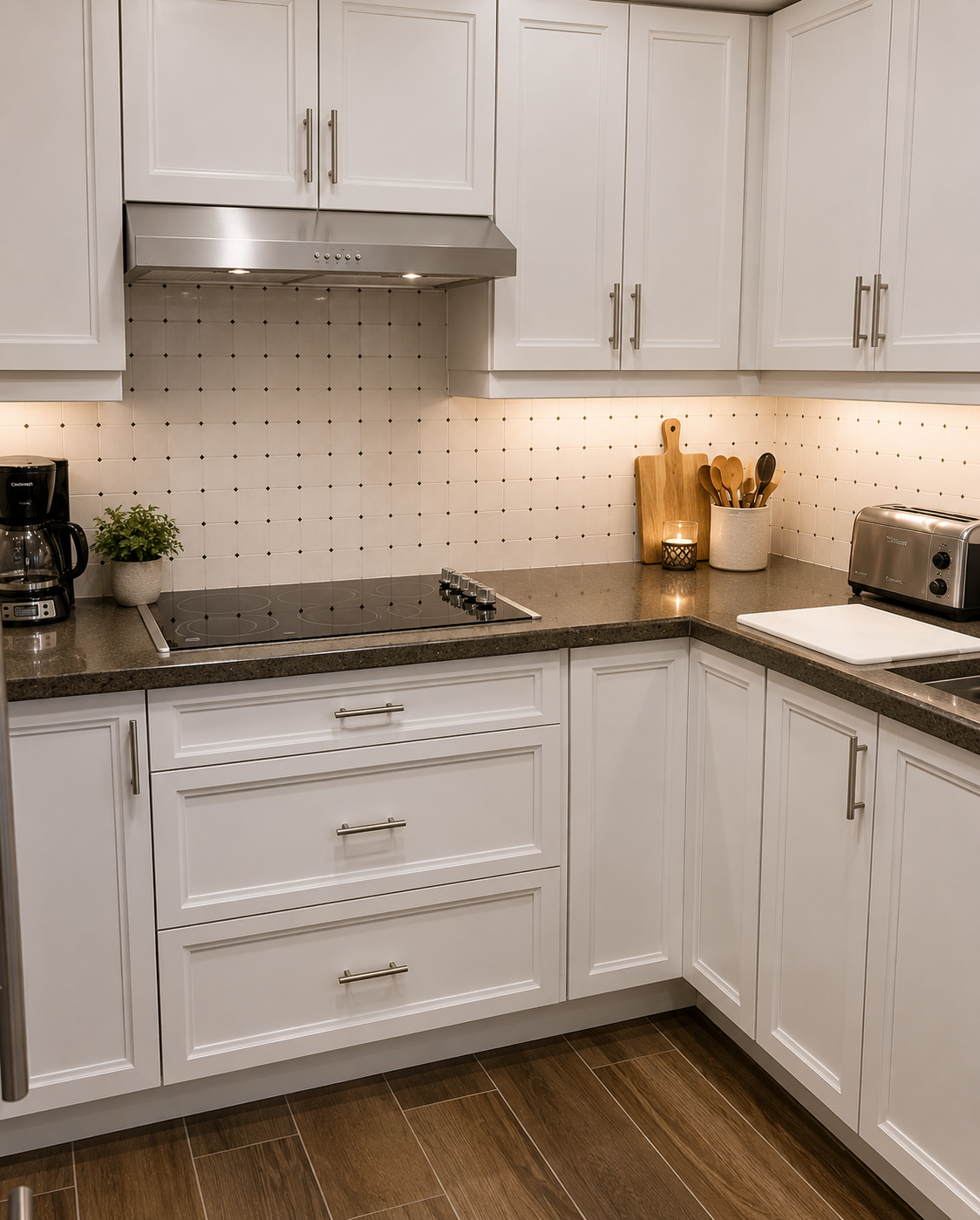
A kitchen backsplash is one of the most visible upgrades in a home. It sits at eye level, frames the countertops and cabinets, and often becomes one of the first details people notice when they walk into the kitchen.
It is also one of the most misunderstood projects when it comes to pricing.
A backsplash may look like a small area, but the final cost depends on more than square footage. Tile material, pattern complexity, wall condition, outlet cuts, edge details, demolition, grout selection, and finish quality can all affect the final investment.
For Charlotte-area homeowners comparing backsplash quotes, the goal should not be to find the lowest number without context. The goal is to understand what is included, what is not included, and what level of installation detail the project actually requires.
The Short Answer: Backsplash Cost Depends on Scope and Complexity
For a standard backsplash area up to approximately 30 square feet, CBC uses a pattern tier system to help homeowners understand realistic installation ranges.
These ranges are intended for planning purposes. They help set expectations before a final project proposal is prepared.
CBC's typical backsplash installation ranges are:
Tier 1: Standard Patterns
Typical installation range: $750–$1,050
Based on: Up to 30 square feet with ceramic or porcelain tile.
Pattern examples include:
- Straight stack
- Running bond / brick set
- 1/3 offset
- Simple horizontal or vertical stack
Standard patterns are clean, straightforward layouts with limited complexity. This tier is best for homeowners who want a refined backsplash with a more controlled installation scope.
Tier 2: Enhanced Patterns
Typical installation range: $950–$1,250
Based on: Up to 30 square feet with ceramic or porcelain tile.
Pattern examples include:
- Vertical running bond
- Diagonal / 45-degree layout
- Non-standard offset
- Directional layouts
Enhanced patterns require more layout planning, alignment control, and cut coordination. This tier is best for projects that need more movement or visual rhythm without becoming fully custom.
Tier 3: Articulated Patterns
Typical installation range: $1,250–$1,550
Based on: Up to 30 square feet with ceramic or porcelain tile.
Pattern examples include:
- Herringbone
- Basket weave
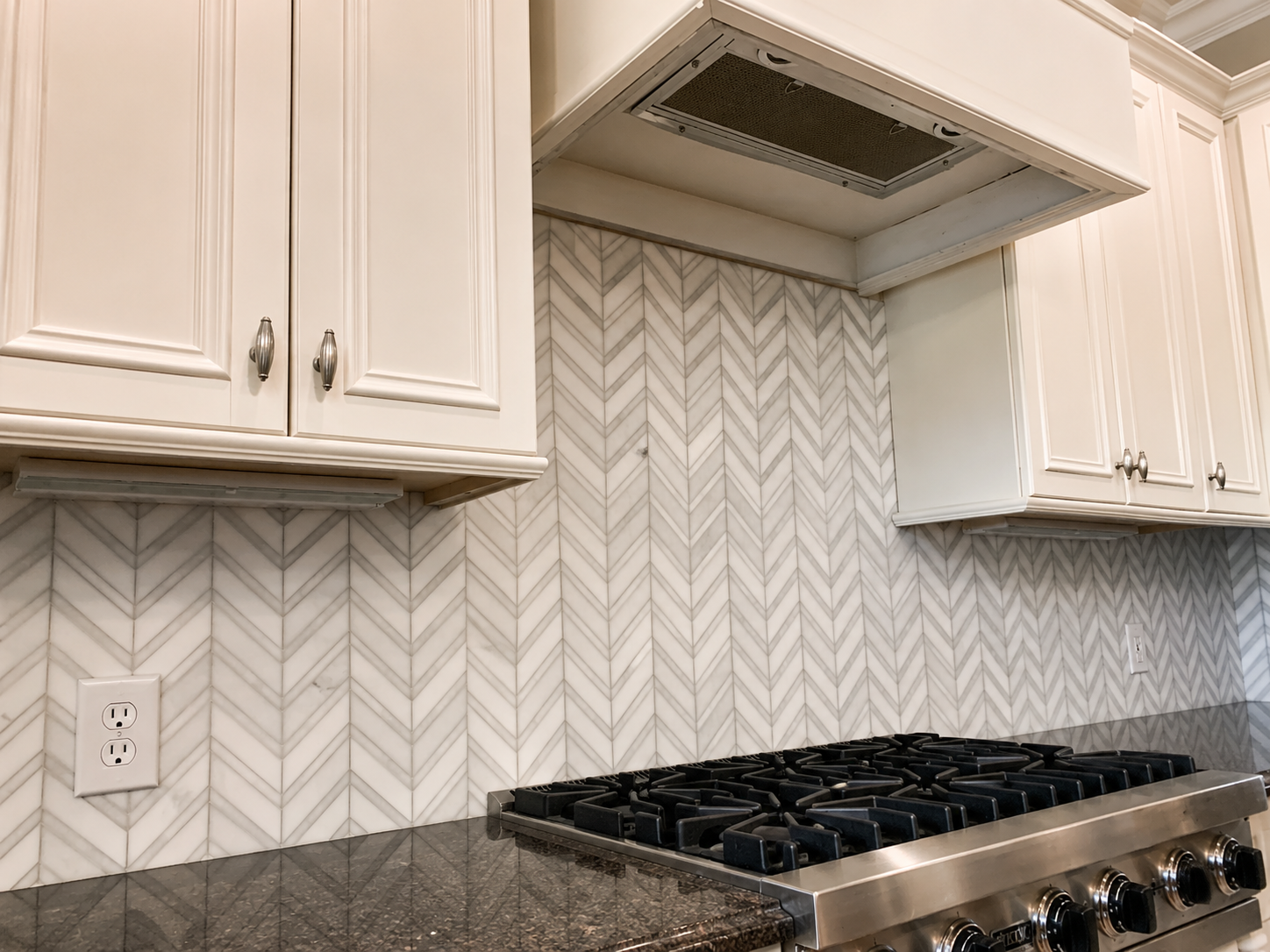
- Chevron
- Complex vertical patterns
Articulated patterns involve more cuts, more alignment sensitivity, and more detailed layout planning. This tier is best when the backsplash is intended to become a stronger design feature.
Tier 4: Signature / Custom Patterns
Typical installation range: $1,500+
Based on: Custom scope review required.
Pattern examples include:
- Double herringbone
- French / Versailles pattern
- Picture frame borders
- Feature material styles
- Mixed materials
- Specialty layouts
Signature and custom backsplash work requires project-specific layout planning, material review, pattern coordination, and detailed scope confirmation.
What CBC's Backsplash Installation Ranges Include
Each CBC installation range includes the core installation services needed for a standard backsplash installation.
Typical included items are:
- Dustgate dust-control preparation and protection
- Professional installation labor
- Standard setting and installation materials
- Basic wall preparation
- Grouting labor
- Final cleanup
This gives homeowners a clearer way to compare installation scope, not just a single price number.
What Is Usually Purchased Separately
Tile, grout material, tile edging or trim, specialty profiles, and other finish materials are purchased separately unless they are specifically included in the written proposal.
This matters because material selection can change the total project investment significantly.
A simple ceramic subway tile and a handmade-look tile may cover the same square footage, but they can require very different planning, handling, layout, and finishing. Natural stone, zellige-style tile, mosaics, specialty trim, and custom pattern work may also require more careful material review before final pricing is confirmed.
Final pricing may change based on:
- Material selection
- Tile size
- Wall condition
- Removal needs
- Outlet cuts
- Edge details
- Layout complexity
- Overall project scope
Why Online Backsplash Pricing Can Be Misleading
Many online cost ranges make backsplash pricing look simpler than it actually is.
Some prices include materials. Some only reflect labor. Some are based on DIY-friendly tile. Some are based on large national averages that may not reflect a premium, detail-focused installation in a real home.
Square-foot pricing can also be misleading because a backsplash is a small, detail-heavy project.
A 30-square-foot backsplash may still require:
- Site protection
- Layout planning
- Cutting around outlets and switches
- Working around cabinets and countertops
- Edge trim planning
- Grout and caulk detailing
- Cleanup
- Return-trip coordination when needed
That is why two backsplashes with the same square footage can fall into different pricing tiers.
The Biggest Factors That Affect Backsplash Cost
A backsplash quote should account for the actual work required to produce a clean finished result.
The most common cost factors include:
1. Tile Material
Tile material affects both product cost and installation complexity.
Ceramic and porcelain are usually more predictable. Handmade-look tile, natural stone, marble, mosaic sheets, glass tile, and specialty materials may require more time, more layout attention, or more careful handling.
Material does not only affect the look. It can also affect cutting, grout choice, sealing needs, trim decisions, and final cleanup.
2. Pattern and Layout
The pattern is one of the biggest pricing factors.
A straight stack or running bond layout is usually more efficient than herringbone, chevron, basket weave, or a picture-frame feature. More complex patterns require more cuts, more alignment control, and more planning around outlets, corners, windows, range hoods, and cabinet lines.
The more intentional the pattern needs to look, the more important layout planning becomes.
3. Square Footage
Square footage still matters, but it is not the only factor.
A larger backsplash generally requires more material and more labor. However, a smaller backsplash with a complex pattern, difficult cuts, or custom edge detail can cost more than a larger backsplash with a simple layout.
This is why CBC uses pattern tiers instead of relying only on square-foot pricing.
4. Wall Condition and Preparation
A backsplash is only as good as the surface behind it.
If the wall is clean, flat, and ready for tile, installation is more straightforward. If old tile needs to be removed, drywall needs repair, adhesive residue needs attention, or the wall is uneven, preparation can affect the final price.
Good prep is not the most exciting part of a backsplash project, but it is one of the reasons the finished tile looks clean and stays consistent.
5. Demo and Removal
Removing an existing backsplash can add cost, especially if the old tile is strongly bonded or if drywall damage occurs during removal.
Some kitchens only need light prep. Others require more careful removal, patching, or surface correction before new tile can be installed.
This should be clarified before the project begins.
6. Outlets, Switches, and Small Cuts
Outlets and switches are often underestimated.
Each outlet requires planning and cutting. On simple tile, this may be straightforward. On herringbone, mosaic, natural stone, or small-format tile, those cuts can become more detailed.
A clean backsplash should look intentional around every outlet, not just across the open wall space.
7. Edges, Trim, and Stopping Points
Where the backsplash starts and stops matters.
Tile may need to end at a cabinet line, window, open wall, countertop edge, range hood, or outside corner. Each of those stopping points needs a clean finish.
Common finish decisions may include:
- Tile edging
- Metal trim profiles
- Bullnose pieces
- Caulked transitions
- Natural stopping points
- Custom layout adjustments
Poor edge planning can make an otherwise good backsplash feel unfinished.
8. Range Walls and Focal Areas
The wall behind the range often becomes the most visible part of the backsplash.
Some homeowners keep the same tile throughout. Others choose a framed detail, herringbone inset, full-height feature, or specialty material behind the range.
Those upgrades can create a more custom look, but they also affect layout planning, cutting, and installation time.
When a Higher Backsplash Investment Makes Sense
Not every backsplash needs to be custom.
A simple, clean standard pattern can look excellent when the tile, grout, trim, and layout are chosen well. In many kitchens, restraint is the right decision.
A higher investment may make sense when:
- The kitchen is open to the living area
- The backsplash is highly visible
- The countertops and cabinets have already been upgraded
- The home has a more premium finish level
- The range wall needs a stronger focal point
- The homeowner wants a custom or designer look
- The existing backsplash feels builder-grade or unfinished
- The home is being prepared for resale or listing photos
This is especially relevant in many Charlotte-area homes where kitchens are open, central, and visually connected to the main living space. CBC serves surrounding communities including Weddington, Fort Mill, Harrisburg, Waxhaw, Davidson, and Cornelius.
How Charlotte-Area Homeowners Should Compare Backsplash Quotes
When comparing backsplash quotes, do not compare only the final number.
Compare what the number actually includes.
A clear backsplash quote should explain:
- Approximate backsplash area
- Tile material assumptions
- Pattern or layout
- Whether demo is included
- What wall prep is included
- Whether grout material is included or separate
- Whether edging, trim, or profiles are included
- How outlets and detailed cuts are handled
- What cleanup and protection are included
- Whether the price is a planning range or final proposal
A lower quote may not include the same prep, protection, materials, trim, or finish details. A higher quote should be able to explain what additional value, complexity, or scope is included.
The best quote is not always the cheapest. It is the one that clearly matches the result the homeowner expects.
What CBC Wants Homeowners to Understand Before Requesting an Estimate
CBC's backsplash pricing is designed to be transparent enough for planning while still respecting the fact that each project needs a final scope review.
The goal is not to inflate the project. The goal is to price the work according to what the backsplash actually requires.
A standard tile layout should not be priced like a custom feature wall. A herringbone or specialty layout should not be treated like a simple running bond. A backsplash with demolition, wall repair, detailed edge work, or custom material should not be compared to a basic install with no prep concerns.
That distinction protects the homeowner and the finished result.
A Practical Way to Plan Your Backsplash Budget
Before requesting a backsplash estimate, it helps to gather a few details:
- Photos of the current kitchen
- Approximate backsplash measurements
- Inspiration photos
- Tile material ideas
- Preferred pattern or layout
- Whether existing tile needs to be removed
- Notes about outlets, windows, range hood areas, or open edges
- Any desired range-wall feature or custom detail
These details help CBC understand whether the project is likely to fall into a standard, enhanced, articulated, or custom tier.
They also help prevent vague estimates that may change once the details are reviewed.
Final Takeaway
A kitchen backsplash may be a smaller project than a full kitchen remodel, but it has a major effect on how finished the space feels.
For most Charlotte-area homeowners, the right backsplash investment depends on the tile material, layout complexity, prep work, edge details, and level of finish expected.
CBC's pricing tiers are designed to make that planning process clearer. They give homeowners a realistic starting point while leaving room for the details that make each kitchen different.
If you are planning a backsplash project, start with the result you want the kitchen to have. Then compare quotes based on scope, detail, and finish quality — not just the lowest number. Explore backsplash installation services or view completed backsplash projects for reference.
Planning a Backsplash Project in the Charlotte Area?
CBC helps homeowners plan professional backsplash installations with clear scope, clean execution, and detail-focused finishing.
Request a backsplash estimate to review your kitchen, tile direction, layout complexity, and project goals.
FAQ
How much does a kitchen backsplash cost in the Charlotte area?
For a standard backsplash area up to approximately 30 square feet, CBC's typical installation planning ranges start around $750–$1,050 for standard patterns, $950–$1,250 for enhanced patterns, $1,250–$1,550 for articulated patterns, and $1,500+ for signature or custom layouts. Final pricing depends on material, prep work, removal needs, outlet cuts, edge details, and project scope.
Does CBC's backsplash pricing include tile?
Tile, grout material, tile edging or trim, specialty profiles, and other finish materials are purchased separately unless specifically included in the written proposal. CBC's installation ranges typically include professional labor, standard setting and installation materials, basic wall preparation, grouting labor, dust-control preparation and protection, and final cleanup.
Why does herringbone backsplash installation cost more?
Herringbone requires more layout planning, more cuts, and more alignment control than a simple straight stack or running bond pattern. Because the pattern is more sensitive to small layout issues, it usually falls into a higher installation tier.
What can increase the cost of a backsplash project?
Common cost increases include existing tile removal, wall repair, uneven surfaces, specialty tile, natural stone, complex patterns, detailed outlet cuts, edge trim, range-wall features, and custom layouts.
Is a backsplash worth upgrading before selling a home?
A clean, professional backsplash can help a kitchen feel more finished in photos and showings, especially if the existing backsplash feels outdated or builder-grade. Whether it is worth doing before listing depends on the condition of the kitchen, the home's price point, and the overall resale strategy.