Materials and Design
Tile Edge Trim, Schluter, Bullnose, and Finished Edges Explained
Finished edges are one of the details that separate polished tile work from average installation. This guide explains metal trim, Schluter-style profiles, bullnose, mitered edges, caulked transitions, and natural stopping points.
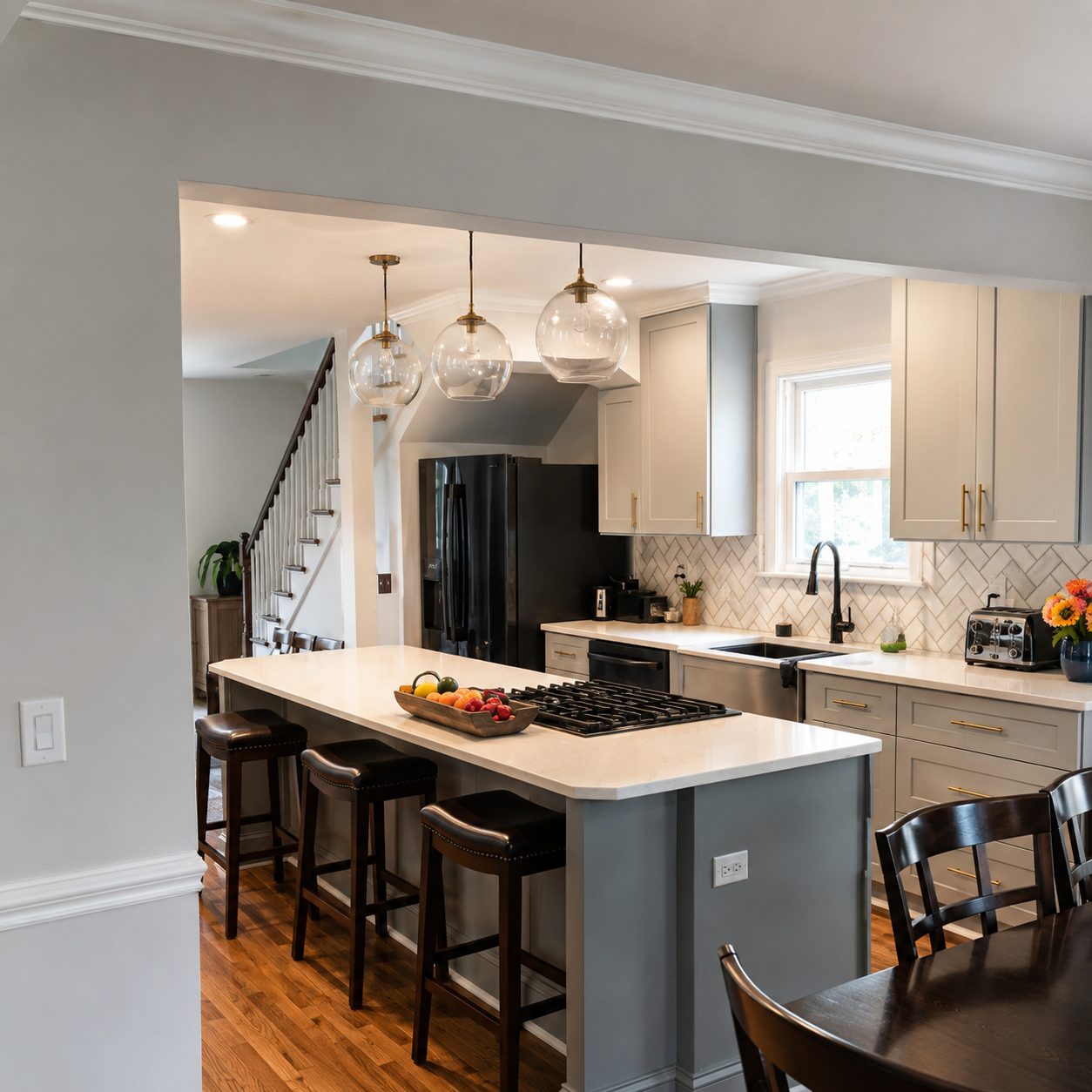
The edge detail is where average tile work often reveals itself.
A backsplash, fireplace surround, shower niche, or feature wall can have beautiful tile and still feel unfinished if the edges are not handled correctly. Exposed tile edges, awkward stopping points, mismatched trim, rough corners, and messy transitions can make an otherwise good project look incomplete.
Finished edges are not a small afterthought. They are part of the design.
For homeowners comparing tile installers, edge planning is one of the clearest signs of whether the project is being treated as a complete finish or just tile placed on a surface.
Why Finished Tile Edges Matter
Tile has to end somewhere.
That ending point may be at a cabinet line, countertop edge, window, fireplace return, shower niche, outside corner, floor transition, or open wall. If that location is not planned before installation begins, the result can feel accidental.
Finished edges affect:
- How polished the project looks
- Whether the tile feels intentional
- How the tile transitions into nearby surfaces
- Whether exposed tile edges are visible
- How clean corners and returns appear
- Whether the installation matches the style of the home
A clean edge does not need to be decorative. It needs to be resolved.
What Is Tile Edge Trim?
Tile edge trim is a finishing profile used where tile ends or turns a corner.
Many homeowners refer to these profiles as Schluter, though Schluter is a brand name and not the only type of metal or tile edge profile available.
Tile trim can be used to finish:
- Backsplash ends
- Outside corners
- Shower niches
- Fireplace returns
- Tile-to-drywall transitions
- Tub surrounds
- Feature walls
- Accent walls
Trim profiles come in different shapes, finishes, thicknesses, and colors. They may be brushed metal, matte black, white, bronze, champagne, stainless, aluminum, or another finish depending on the project.
The right trim should fit the tile thickness, room style, hardware finish, and level of visibility.
When Metal Trim Works Well
Metal trim works well when the tile needs a clean, controlled edge and the tile itself does not have a finished edge option.
It is often a good choice for:
- Modern backsplashes
- Large-format tile
- Porcelain tile
- Fireplace surrounds
- Shower niches
- Outside corners
- Tile ending on open drywall
- Tile without bullnose pieces
Metal trim can look sharp and professional when the finish is selected carefully.
The mistake is treating trim as a default without considering color, profile size, and location. A trim profile that is too thick, too shiny, too dark, or mismatched to the room can stand out for the wrong reason.
What Is Bullnose Tile?
Bullnose tile is a tile piece with a rounded or finished edge.
It is often used where tile needs to end without adding a metal profile. Bullnose can create a softer, more traditional edge.
Bullnose may be used for:
- Backsplash ends
- Shower edges
- Tub surrounds
- Wall tile borders
- Niches
- Fireplace surrounds
- Bathroom tile transitions
Bullnose can be a strong choice when the tile collection includes matching pieces. It may feel more classic than metal trim and can work well in traditional or transitional homes.
The limitation is that not every tile line has matching bullnose. Even when it does, the bullnose may not match perfectly in color, finish, or size.
What Are Mitered Tile Edges?
A mitered edge is created when tile edges are cut at an angle so two pieces meet cleanly at a corner.
This can create a very custom look when done correctly.
Mitered edges may be used on:
- Outside shower corners
- Fireplace returns
- Niches
- Feature walls
- Large-format tile
- Slab-inspired tile installations
Mitered edges are detail-sensitive and not appropriate for every material or project. Some tiles chip easily. Some edges are too fragile. Some locations are too exposed to impact.
A mitered edge can look premium, but it requires the right material, skill, and project conditions.
What Are Caulked Transitions?
Not every tile edge needs trim.
In some areas, a clean caulked transition is the right detail. This is common where tile meets another surface that may move differently.
Caulked transitions may appear where tile meets:
- Countertops
- Cabinets
- Inside corners
- Painted drywall
- Window trim
- Shower corners
- Tub edges
- Fireplace trim
- Flooring transitions
A caulked line should be clean, controlled, and appropriate for the surface.
Poor caulk work can make the entire project feel sloppy. Good caulk work usually disappears into the finished design.
Natural Stopping Points
Sometimes the best edge detail is choosing the right place to stop the tile.
Natural stopping points may include:
- Cabinet ends
- Countertop edges
- Inside corners
- Window trim
- Range hood boundaries
- Full-height wall breaks
- Fireplace width
- Built-in edges
- Doorway lines
A natural stopping point helps the tile feel connected to the architecture of the room.
Without a clear stopping point, tile can look like it ended randomly.
This is especially important for backsplashes in open kitchens, where the counter may continue beyond upper cabinets or where the backsplash meets a side wall.
Backsplash Edge Details
Backsplash edges are highly visible because they sit at eye level.
Common backsplash edge decisions include:
- Should the tile stop at the cabinet or countertop?
- Should the side edge use metal trim?
- Is there a matching bullnose?
- Does the tile need to wrap a corner?
- How should the range wall end?
- How should tile meet a window?
- What happens at open walls?
A backsplash with clean tile in the middle but poor edge planning can still feel unfinished.
CBC considers edge details before installation so the backsplash looks resolved from one side to the other.
Fireplace Edge Details
Fireplaces are focal points, so the edge detail matters even more.
Fireplace tile may need to meet:
- Firebox openings
- Hearth surfaces
- Mantels
- Drywall
- Built-ins
- Outside corners
- Full-height wall edges
- TV walls
- Floating shelves
The edge detail should match the level of the fireplace project.
A simple surround may need clean trim and firebox transitions. A full-height feature wall may need more careful planning around vertical edges, material thickness, and visible corners.
A fireplace should not look like tile was added after the room was already finished. The edges should help it feel built into the space.
Shower and Bathroom Edge Details
Bathroom tile often has more edge conditions than homeowners expect.
Edges may appear around:
- Shower niches
- Curbs
- Benches
- Pony walls
- Tub surrounds
- Outside corners
- Tile-to-drywall transitions
- Vanity backsplashes
- Bathroom floors
- Shower glass areas
In wet areas, edge planning is not only visual. It also affects how the shower or bathroom surface is finished and maintained.
A niche, for example, needs clean edges, proper slope, and coordinated trim or finished pieces. A shower curb needs carefully planned faces, top surface, corners, and transitions.
Common Tile Edge Mistakes
Common edge mistakes include:
- Exposed unfinished tile edges
- Missing trim
- Trim that does not match the room
- Wrong trim thickness
- Bullnose that does not match the tile
- Rough outside corners
- Awkward stopping points
- Tile ending past the cabinet line without a plan
- Poor caulk lines
- Unplanned fireplace returns
- Shower niche edges that look patched together
These details may seem minor during planning, but they become visible every day once the project is finished.
How to Choose the Right Edge Detail
The right edge detail depends on the tile, room, surface, and project style.
Homeowners should consider:
- Does the tile have a finished edge option?
- Is the room modern, traditional, transitional, or organic?
- Will the edge be highly visible?
- Does the tile need to wrap a corner?
- Is metal trim appropriate?
- Will bullnose look better?
- Is a mitered edge suitable?
- Is the stopping point natural?
- How does the edge relate to hardware, cabinets, countertops, or mantels?
The goal is not to use the fanciest edge detail. The goal is to use the right one.
How CBC Handles Finished Edges
CBC thinks through tile ending points before installation begins.
That includes reviewing the tile material, trim options, wall layout, visible corners, exposed edges, grout direction, and transitions into nearby surfaces.
For backsplashes, that may mean deciding whether the tile should stop at the cabinet line, countertop edge, or a trim profile.
For fireplaces, it may mean planning the return, hearth, mantel, and full-height wall edge.
For bathrooms, it may mean resolving niche edges, curbs, tile-to-drywall transitions, and shower glass areas.
The finished edge should support the project instead of distracting from it.
For more on finish quality, see what makes a tile installation look high-end. Explore backsplash installation services, fireplace tile services, and view completed tile projects.
Final Takeaway
Tile edges are where average work often reveals itself.
Metal trim, Schluter-style profiles, bullnose, mitered edges, caulked transitions, and natural stopping points all have a place. The right choice depends on the tile, room, surface, and finished look the homeowner wants.
A premium tile project should feel complete from the center of the installation all the way to the edge.
Want the Tile Details Finished Correctly?
CBC helps homeowners plan tile projects with clean edges, thoughtful trim details, polished transitions, and installation decisions made before work begins.
Request a tile estimate to review your project, tile direction, and finish details.
FAQ
What is the best way to finish tile edges?
The best edge detail depends on the tile and project. Metal trim, bullnose, mitered edges, caulked transitions, and natural stopping points can all work when planned correctly.
Is Schluter the same as tile edge trim?
Schluter is a well-known brand of tile profiles, but many homeowners use the name to describe metal tile edge trim in general. The right profile depends on tile thickness, finish, and project style.
Is bullnose tile better than metal trim?
Not always. Bullnose can feel softer and more traditional, while metal trim can feel cleaner and more modern. The better option depends on the tile and room.
Do backsplashes always need edge trim?
No. Some backsplashes stop naturally at a cabinet, wall, or corner. Others need trim or another finished edge detail.
Why do unfinished tile edges look bad?
Unfinished edges expose the side of the tile and can make the project look incomplete. Finished edges help the installation look intentional and polished.