Materials and Design
The Best Backsplash Materials for a High-End Kitchen
The right backsplash material depends on more than appearance. This guide compares ceramic, porcelain, marble, natural stone, glass, handmade tile, zellige, mosaics, and slab-style looks so homeowners can choose a material that fits their kitchen, lifestyle, and desired finish level.
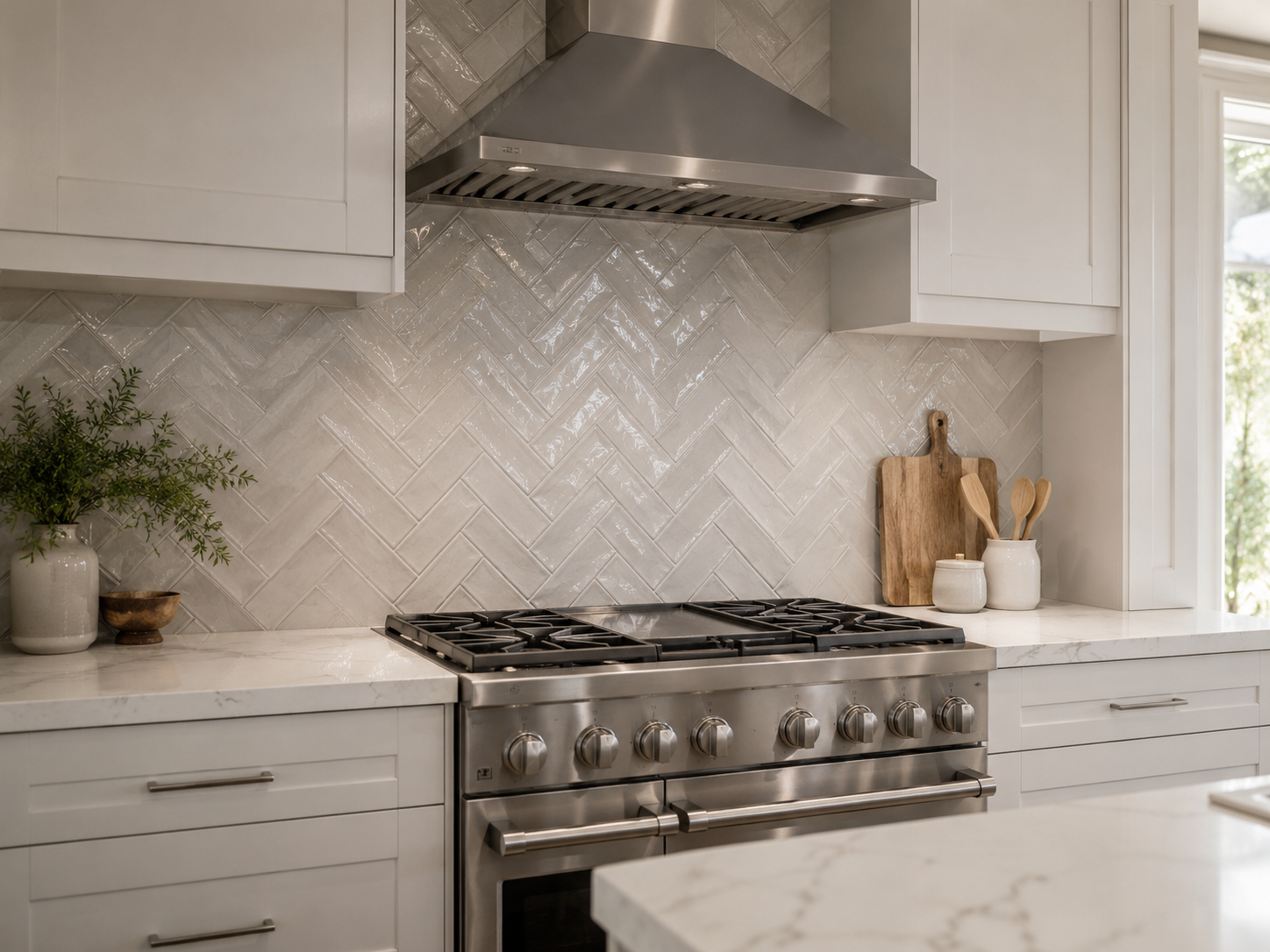
The backsplash material you choose has a major effect on how your kitchen feels.
It influences the style of the room, the amount of maintenance required, the installation complexity, the grout choice, the trim details, and the total project investment. Two kitchens can have the same square footage, but very different outcomes depending on the material selected.
That is why the best backsplash material is not always the most expensive one. It is the material that fits the kitchen, the homeowner's lifestyle, the level of finish desired, and the way the space is used every day.
For Charlotte-area homeowners planning a premium kitchen upgrade, the right material should feel intentional. It should work with the cabinets, countertops, lighting, flooring, hardware, and overall style of the home.
The Best Backsplash Material Depends on the Kitchen
There is no single best backsplash material for every high-end kitchen.
A polished South Charlotte kitchen with custom cabinetry may need a different material than a warm family kitchen in Fort Mill, a lake-area home in Davidson, or a newer suburban home in Marvin or Weddington. Some kitchens need texture. Some need quiet restraint. Some need a stronger focal point behind the range. Others need a clean material that supports the rest of the room without competing with it.
Before choosing tile, homeowners should think through:
- The style of the kitchen
- The countertop material
- The cabinet color and finish
- The amount of natural light
- The desired level of maintenance
- The pattern or layout
- The grout color
- The edge and trim details
- The visibility of the backsplash from other rooms
- The overall project budget
A backsplash is not just a background surface. In many kitchens, it becomes one of the most visible finish details in the home.
Ceramic Tile: Clean, Versatile, and Practical
Ceramic tile is one of the most common backsplash materials for a reason.
It is available in a wide range of colors, sizes, finishes, textures, and price points. It can look simple and classic, or it can feel more elevated when the shape, finish, grout color, and layout are chosen carefully.
Ceramic is often a good fit for homeowners who want:
- A clean kitchen upgrade
- A classic backsplash material
- A wide range of style options
- A practical material for everyday use
- A more controlled project investment
- A simple or moderately detailed layout
Ceramic tile can work especially well in subway, straight stack, vertical stack, and soft textured layouts. It can also be a smart choice when the homeowner wants the backsplash to support the kitchen rather than dominate it.
The key with ceramic tile is avoiding a basic look if the goal is a high-end finish. A simple ceramic backsplash can still feel premium when the layout is balanced, the grout color is right, the cuts are clean, and the edge detail is handled well.
Porcelain Tile: Durable, Refined, and Design-Flexible
Porcelain is another strong backsplash option, especially for homeowners who want durability and design flexibility.
Porcelain tile is dense and often available in styles that mimic marble, limestone, concrete, handmade tile, or large-format slab looks. It can create a clean, elevated finish without some of the maintenance concerns that come with certain natural stones.
Porcelain is often a good fit for:
- Modern kitchens
- Transitional kitchens
- Marble-look designs
- Large-format backsplash areas
- Low-maintenance households
- Homes where durability matters
- Clean range-wall designs
Porcelain can be especially effective when a homeowner wants the look of natural stone but prefers a more predictable surface. Marble-look porcelain, for example, can give a kitchen a refined appearance without the same sensitivity to staining or etching that real marble may have.
The main consideration with porcelain is installation. Depending on the size, thickness, layout, and edge detail, porcelain may require more planning and more precise cutting than a simple ceramic backsplash.
Marble: Elegant, Natural, and Maintenance-Sensitive
Marble has a look that is difficult to fully replicate.
It brings natural variation, movement, softness, and a classic high-end feel. In the right kitchen, a marble backsplash can feel timeless and refined.
Marble is often a good fit for:
- Traditional kitchens
- Luxury transitional kitchens
- Soft neutral palettes
- Kitchens with marble or stone countertops
- Homeowners who appreciate natural variation
- Designs where elegance matters more than perfect uniformity
However, marble is not the right material for every homeowner.
As a natural stone, marble can be more sensitive to staining, etching, sealing needs, and cleaning products than ceramic or porcelain. Acidic foods, harsh cleaners, and improper maintenance can affect the surface over time.
That does not mean marble should be avoided. It means the homeowner should understand what ownership looks like before choosing it.
Marble works best for homeowners who appreciate natural materials and are comfortable with the character that develops over time.
Natural Stone: Warm, Textured, and Character-Driven
Natural stone includes materials such as marble, limestone, travertine, slate, quartzite, and other stone tile options.
Each stone has its own look, texture, density, porosity, and maintenance profile. Some feel refined and polished. Others feel rustic, organic, or architectural.
Natural stone can be a strong fit for:
- Warm traditional kitchens
- European-inspired kitchens
- Transitional homes
- Organic modern spaces
- Fireplace-adjacent kitchen designs
- Homes with natural wood, brass, stone, or plaster finishes
The appeal of natural stone is its depth and variation. No two pieces are exactly the same.
The tradeoff is that natural stone usually requires more thoughtful selection, installation, sealing, and care. Grout color, stone finish, edge detail, and cleaning routine all matter.
For a high-end kitchen, natural stone should be chosen intentionally. It should not be selected only because it looks good in a small sample.
Zellige Tile: Handmade Character and Reflective Texture
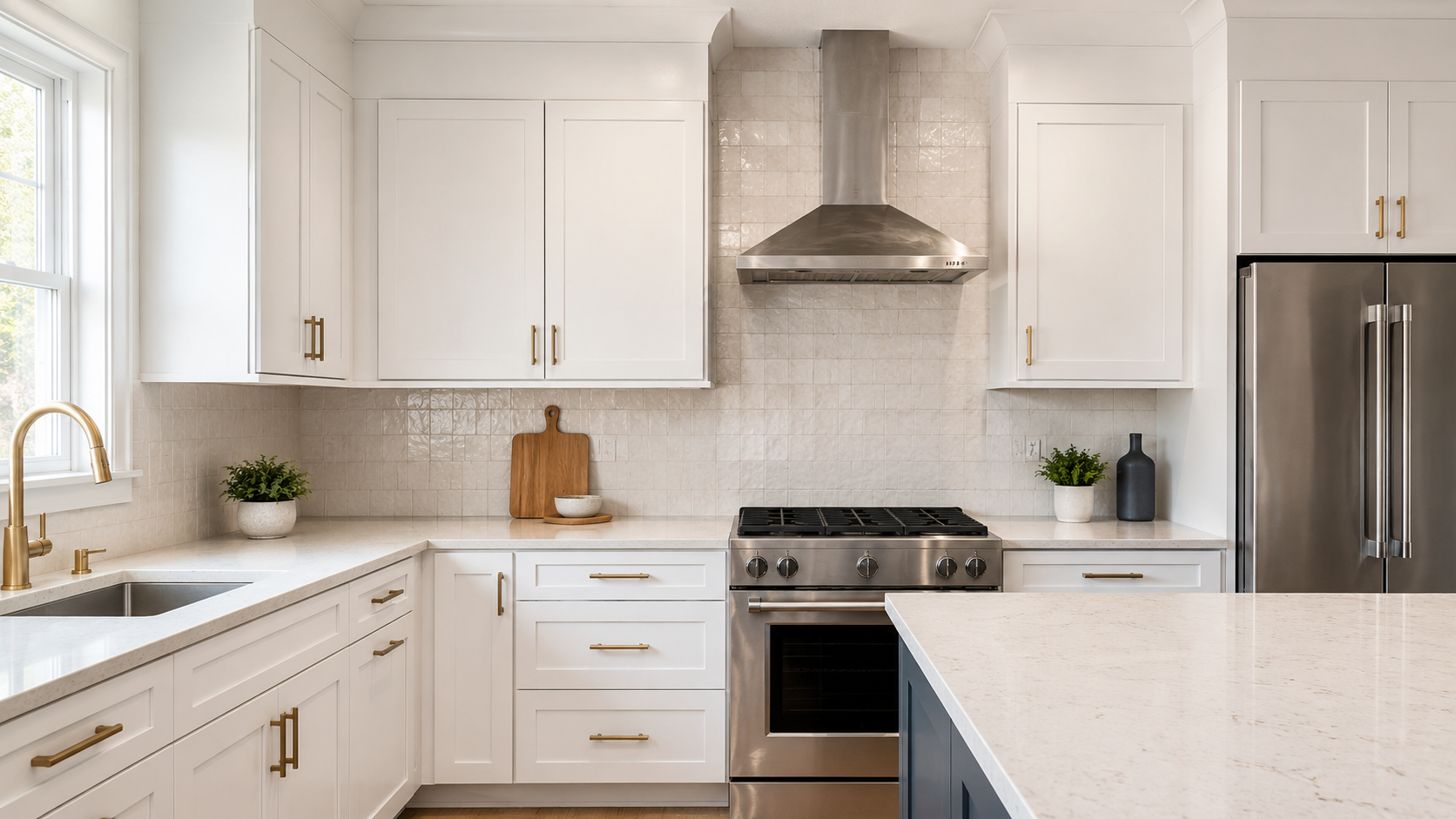
Zellige tile has become popular because of its handmade look, surface movement, and reflective glaze.
It can bring warmth, texture, and subtle imperfection to a kitchen. Instead of looking flat or uniform, zellige often catches light differently across each tile. That variation is part of its appeal.
Zellige-style tile is often a good fit for:
- Warm white kitchens
- Organic modern kitchens
- European-inspired kitchens
- Soft neutral palettes
- Kitchens that need texture
- Homeowners who like handmade character
- Spaces where light reflection matters
The important thing to understand is that zellige is not supposed to look perfectly uniform. Variation in color, shape, thickness, and surface texture is part of the material.
That means installation planning is important. The homeowner should be comfortable with variation before the tile is installed. Material blending, layout review, grout selection, and edge planning all matter.
Zellige can look beautiful in a high-end kitchen, but it is best for homeowners who want character, not perfection.
Handmade Tile: Custom Feel Without Overcomplication
Handmade tile and handmade-look tile can give a backsplash a more custom appearance.
These materials often have slight variation in edge, color, surface, or finish. That gives the kitchen more movement and depth than a very flat, machine-perfect tile.
Handmade tile can be a strong choice for:
- Transitional kitchens
- Custom-looking backsplashes
- Warm neutral palettes
- Range-wall focal points
- Kitchens with natural materials
- Homeowners who want subtle texture
The main advantage is character. The main consideration is consistency.
Handmade tile often requires more layout attention than standard tile. Slight size or surface variations may affect grout joints, edge detail, and overall alignment. This does not mean the installation should look messy. It means the final look should be planned around the nature of the material.
A good handmade tile backsplash should feel relaxed but still controlled.
Glass Tile: Reflective, Clean, and Detail-Sensitive
Glass tile can create a clean and reflective backsplash, especially in kitchens that need light, brightness, or a more polished finish.
It can work well in certain modern, transitional, or coastal-inspired kitchens. It may also be used in mosaic sheets or accent areas.
Glass tile is often a good fit for:
- Bright kitchens
- Modern kitchens
- Smaller kitchens that need more light reflection
- Clean neutral designs
- Accent details
- Certain mosaic applications
The challenge with glass is that it can be less forgiving during installation. Cuts, adhesive coverage, wall flatness, and layout decisions may be more visible than with some ceramic or porcelain materials.
Glass tile should be selected carefully. In some kitchens, it can feel crisp and elevated. In others, it can feel dated or too reflective if the color, size, and finish are not chosen well.
For a premium kitchen, glass usually works best when it is used with restraint.
Mosaic Tile: Detailed, Decorative, and Pattern-Focused
Mosaic tile can add pattern, texture, and visual detail to a backsplash.
Mosaics may include ceramic, porcelain, glass, marble, stone, metal, or mixed-material designs. They can be used across the full backsplash or as a feature behind the range.
Mosaic tile is often a good fit for:
- Decorative range-wall features
- Traditional kitchens
- Transitional kitchens
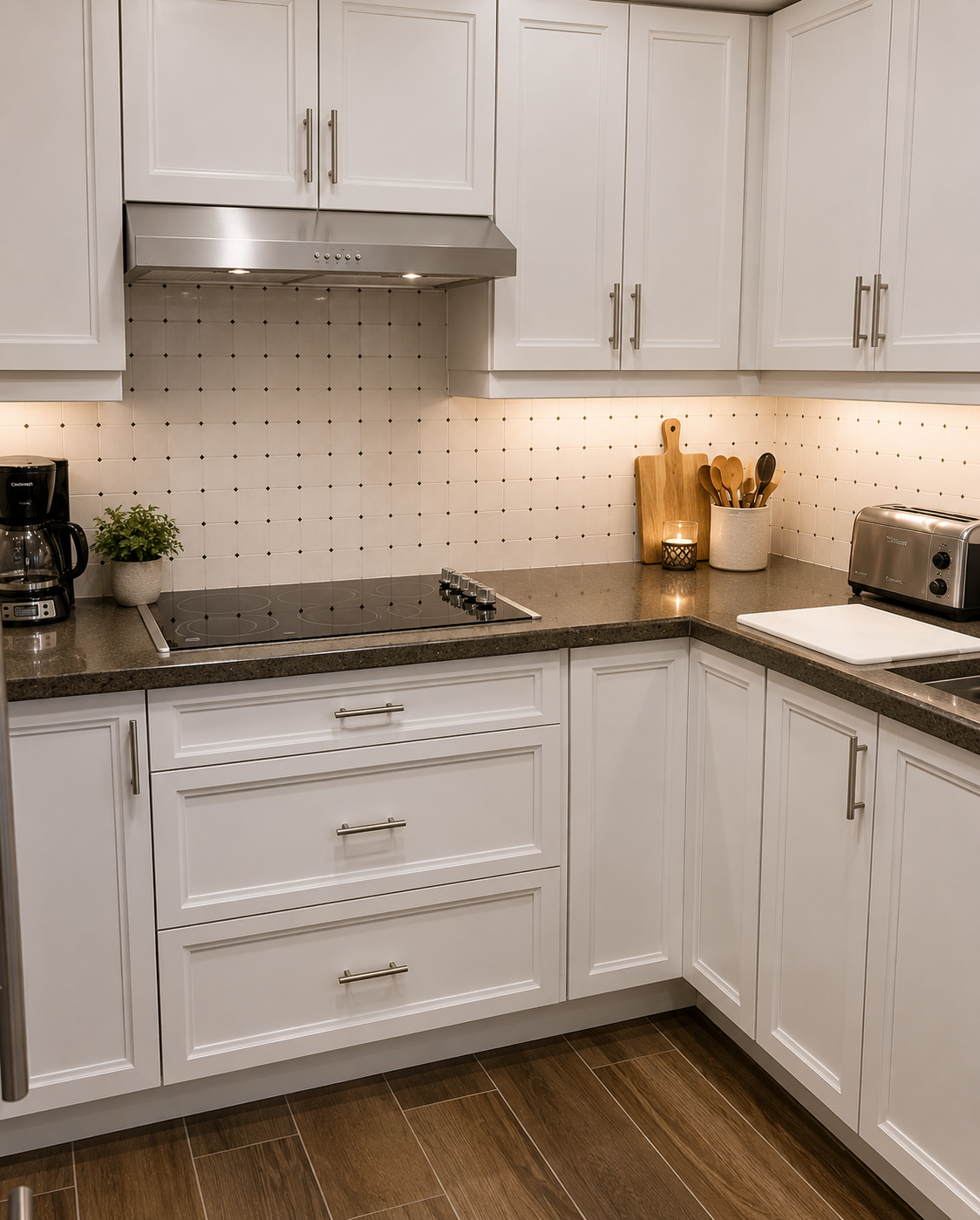
- Powdery stone textures
- Small detail areas
- Homeowners who want a stronger design statement
The biggest benefit of mosaic tile is visual interest.
The biggest consideration is grout.
Because mosaics often have more joints, they may create a busier look and require more cleaning attention than larger-format tile. They can also require careful alignment so the sheet lines do not show.
A mosaic backsplash can look high-end when the pattern, grout color, sheet layout, and edge detail are controlled. It can look less refined if the layout is rushed or the material does not match the kitchen's overall style.
Slab-Style Looks: Clean, Minimal, and Premium
Slab-style backsplashes have become popular in higher-end kitchens because they create a clean surface with fewer grout lines.
This look may be created with a true slab material, large-format porcelain panels, stone-look porcelain, or large tile formats that create a more continuous surface.
Slab-style looks are often a good fit for:
- Modern kitchens
- Luxury transitional kitchens
- Minimalist designs
- Kitchens with dramatic countertops
- Full-height range walls
- Homeowners who want fewer grout lines
- Designs that need a clean architectural feel
This type of backsplash can feel very premium, but it usually requires more planning.
Material handling, wall flatness, outlet placement, seam planning, edge detailing, and fabrication or installation logistics all matter. It may also involve a different scope than a standard tile backsplash.
For homeowners who want a clean, upscale look, slab-style materials can be a strong option. They should be reviewed carefully before assuming they fit the same scope as a standard tile installation.
How Material Choice Affects Backsplash Cost
Backsplash pricing is not only based on square footage.
Material choice can affect the project because different tiles require different levels of planning, cutting, setting, handling, and finish detail.
A backsplash material may affect cost because of:
- Tile size
- Tile thickness
- Material hardness
- Surface texture
- Handmade variation
- Pattern complexity
- Number of cuts
- Outlet and switch cuts
- Edge trim requirements
- Sealing or care needs
- Grout joint size
- Installation time
For example, a standard ceramic subway tile in a running bond layout usually has a different installation scope than a marble mosaic, zellige-style tile, herringbone pattern, or large-format porcelain range wall.
This is why CBC backsplash pricing should always be reviewed around both the material and the layout. The tile choice and pattern work together. See kitchen backsplash cost in the Charlotte area for planning ranges and scope factors.
Maintenance Should Be Part of the Decision
A backsplash is exposed to cooking, splatter, cleaning products, moisture, and daily use.
Some materials are easier to maintain than others.
Homeowners should think about:
- How often the kitchen is used
- Whether the range area gets heavy cooking splatter
- Whether the material needs sealing
- Whether the surface is smooth or textured
- How much grout will be exposed
- Whether the tile has a glossy, matte, honed, or uneven finish
- What cleaning products are safe for the material
Ceramic and porcelain are usually easier to live with for many households. Marble and natural stone can be beautiful, but they require more care. Zellige and handmade tile offer character, but their texture and variation should be expected. Mosaics can add detail, but more grout joints may mean more cleaning.
A high-end material should still fit the way the kitchen is actually used.
Grout and Trim Are Part of the Material Choice
The tile itself is only one part of the finished backsplash.
Grout and trim can change how the material looks.
A white tile with white grout feels softer and more seamless. The same tile with darker grout may emphasize the pattern. A handmade tile with tonal grout may feel refined and organic. A high-contrast grout may make the same tile feel busier.
Trim matters too.
Some materials have matching bullnose or finished edges. Others may need metal profiles, clean termination points, or custom edge planning. This is especially important for open wall ends, window edges, range-wall features, and areas where the backsplash does not die into a cabinet.
Before choosing a backsplash material, homeowners should also ask:
- What grout color works best with this tile?
- What grout joint size is appropriate?
- How should exposed edges be finished?
- Does this material need trim?
- Does the tile thickness affect edge details?
- Will the material look good around outlets and switches?
These details often separate a polished installation from one that feels incomplete.
Best Backsplash Materials by Kitchen Style
The best material depends heavily on the kitchen style.
For a Clean Transitional Kitchen
Good options may include:
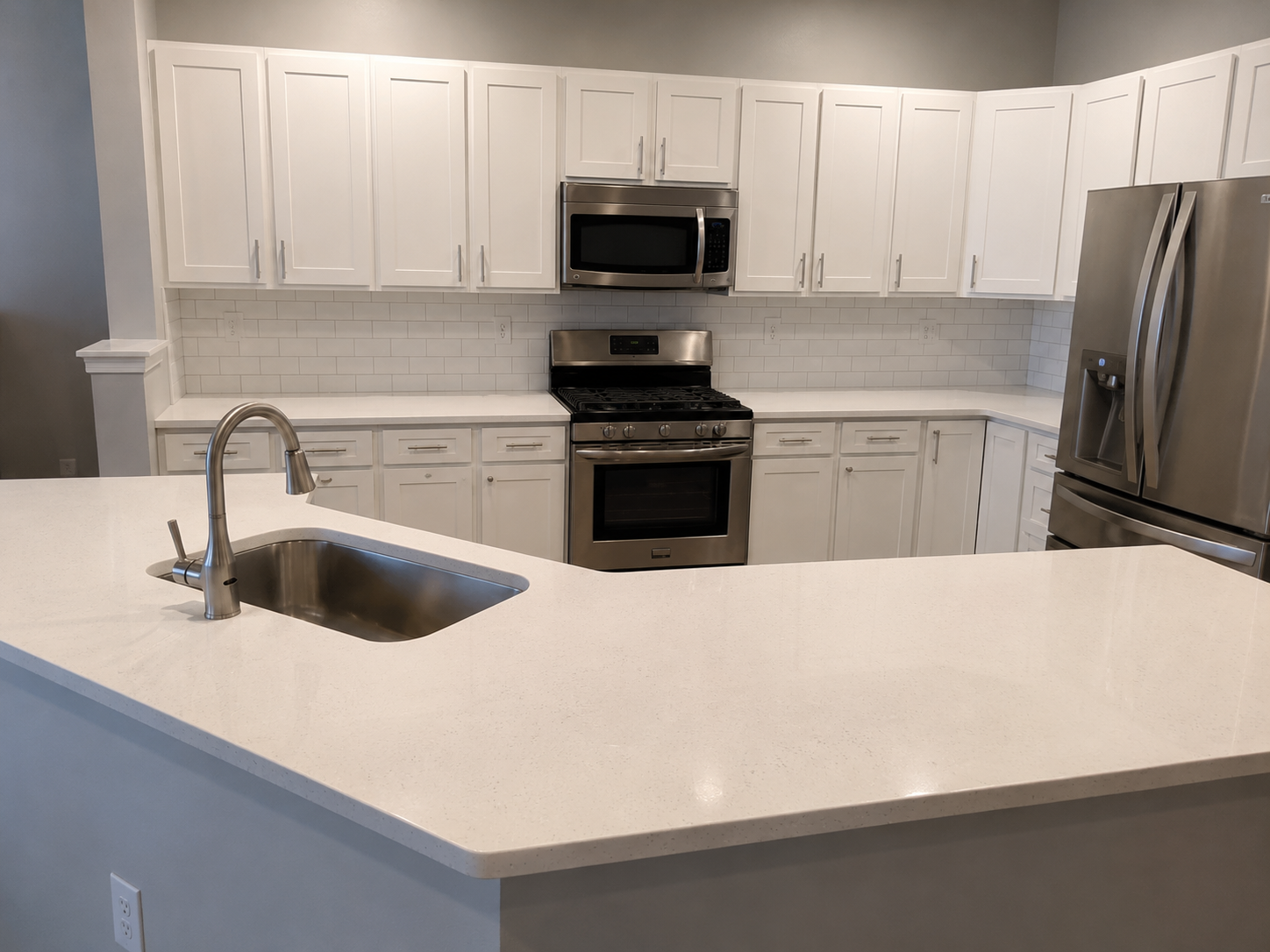
- Ceramic subway tile
- Handmade-look ceramic
- Marble-look porcelain
- Soft neutral zellige-style tile
- Large-format porcelain
- Subtle natural stone
The goal is usually balance. The backsplash should add interest without overpowering the cabinets and countertops.
For a Modern Kitchen
Good options may include:
- Large-format porcelain
- Slab-style looks
- Vertical stacked tile
- Matte porcelain
- Glass tile used carefully
- Minimal grout designs
Modern kitchens usually benefit from cleaner lines, fewer interruptions, and restrained material choices.
For a Traditional Kitchen
Good options may include:
- Marble
- Natural stone
- Ceramic subway tile
- Basket weave mosaics
- Framed range-wall details
- Soft honed finishes
Traditional kitchens often support classic materials and more detailed focal points.
For a Warm Organic Kitchen
Good options may include:
- Zellige tile
- Handmade tile
- Limestone-look porcelain
- Natural stone
- Textured ceramic
- Soft neutral tile
These materials can add warmth, movement, and depth without feeling overly polished.
For a Builder-Grade Kitchen Upgrade
Good options may include:
- Ceramic tile with a stronger layout
- Handmade-look tile
- Vertical stack tile
- Soft textured tile
- Marble-look porcelain
- Clean neutral backsplash materials
In many newer suburban homes, the right backsplash material can make the kitchen feel more custom without requiring a full remodel.
Materials That Look High-End Without Being Overdone
A high-end kitchen does not need the loudest tile.
Often, the most elevated backsplashes are controlled, well-proportioned, and coordinated with the rest of the room.
Materials that often create a premium look include:
- Warm white handmade-look tile
- Soft neutral porcelain
- Marble-look porcelain
- Honed marble
- Subtle zellige-style tile
- Textured ceramic
- Large-format porcelain
- Natural stone in the right setting
The material should support the kitchen's architecture and finish palette. When the backsplash fights the countertops, cabinets, hardware, or flooring, the kitchen can feel less refined.
High-end design is often about choosing the right amount of detail. For more on execution quality, see what makes a tile installation look high-end.
Common Material Selection Mistakes to Avoid
Homeowners can avoid many backsplash regrets by thinking beyond the sample.
Common mistakes include:
- Choosing tile from one close-up photo without seeing it in the kitchen
- Ignoring how the tile looks with the countertop
- Forgetting to consider grout color
- Choosing a material that requires more maintenance than expected
- Picking a busy tile for an already busy countertop
- Choosing handmade tile without understanding variation
- Selecting a mosaic without considering grout maintenance
- Forgetting edge trim and stopping points
- Choosing based only on trend instead of long-term fit
- Assuming every tile has the same installation complexity
A backsplash should look good in the actual kitchen, not just on a sample board.
How CBC Helps Homeowners Choose Backsplash Materials
CBC's role is not only to install the tile. It is to help homeowners understand how the material, layout, grout, trim, and installation details work together.
During the planning process, CBC can help review:
- Material type
- Tile size
- Pattern direction
- Layout complexity
- Grout color direction
- Edge and trim needs
- Range-wall options
- Outlet and switch conditions
- Prep or removal needs
- Whether the material fits the desired finish level
This helps homeowners make a more confident decision before the project begins.
The goal is not to push the most expensive tile. The goal is to choose a backsplash material that fits the kitchen and can be installed in a way that looks clean, intentional, and finished. Explore backsplash installation services or view completed backsplash projects for material and layout reference.
Final Takeaway
The best backsplash material for a high-end kitchen is the one that fits the home, the lifestyle, and the desired level of finish.
Ceramic and porcelain can be clean, practical, and elevated. Marble and natural stone can bring depth and elegance with more maintenance responsibility. Zellige and handmade tile can add character and texture. Glass can create brightness when used carefully. Mosaics can add detail, but require strong layout control. Slab-style looks can create a clean premium statement with more planning.
Material matters, but the finished result depends on how the material is selected, laid out, installed, grouted, edged, and maintained.
A well-chosen backsplash should make the kitchen feel more complete, not more complicated.
Planning a Backsplash Project in the Charlotte Area?
CBC helps homeowners compare backsplash materials, layout options, grout choices, and finish details before installation begins.
Plan your backsplash project and request an estimate to review your kitchen, material direction, and project scope.
FAQ
What is the best backsplash material for a high-end kitchen?
The best backsplash material depends on the kitchen style, maintenance expectations, budget, and desired finish level. Ceramic, porcelain, marble, handmade tile, zellige-style tile, natural stone, glass, mosaics, and slab-style materials can all look high-end when they are selected and installed properly.
Is porcelain or ceramic better for a kitchen backsplash?
Both can work well. Ceramic is versatile, practical, and available in many styles. Porcelain is denser and often used when homeowners want durability, marble-look designs, large-format tile, or a more refined finish. The better choice depends on the tile, layout, and kitchen design.
Is marble a good backsplash material?
Marble can be a beautiful backsplash material, especially in traditional or luxury transitional kitchens. It does require more care than ceramic or porcelain because it is a natural stone and may be sensitive to staining, etching, sealing needs, and certain cleaning products.
Is zellige tile good for a backsplash?
Zellige tile can be a strong backsplash choice for homeowners who want handmade character, surface movement, and reflective texture. It is not meant to look perfectly uniform, so homeowners should be comfortable with variation in color, shape, thickness, and finish.
Which backsplash materials are easiest to maintain?
Ceramic and porcelain are often easier to maintain for many households. Glass can also be easy to clean, though it may show surface marks more readily. Natural stone, marble, handmade tile, and some mosaics may require more careful cleaning, sealing, or maintenance depending on the material.