Fireplaces
Fireplace Tile Ideas That Make a Living Room Feel Finished
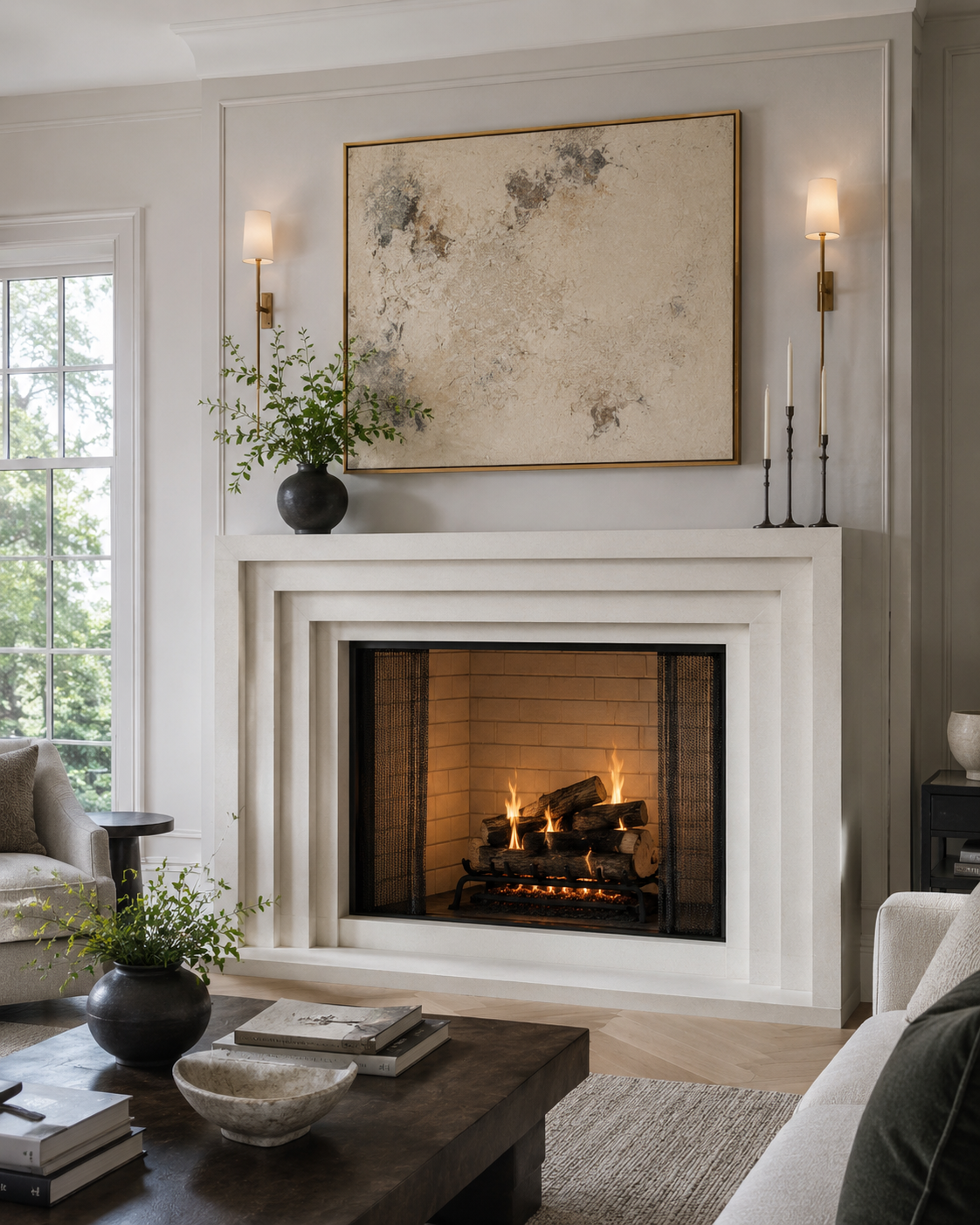
A fireplace should feel intentional, not like an afterthought. This guide explains fireplace tile ideas that can make a living room feel more finished, including large format tile, marble-look porcelain, stacked stone, fluted tile, slab-inspired surrounds, and clean modern fireplace feature walls.
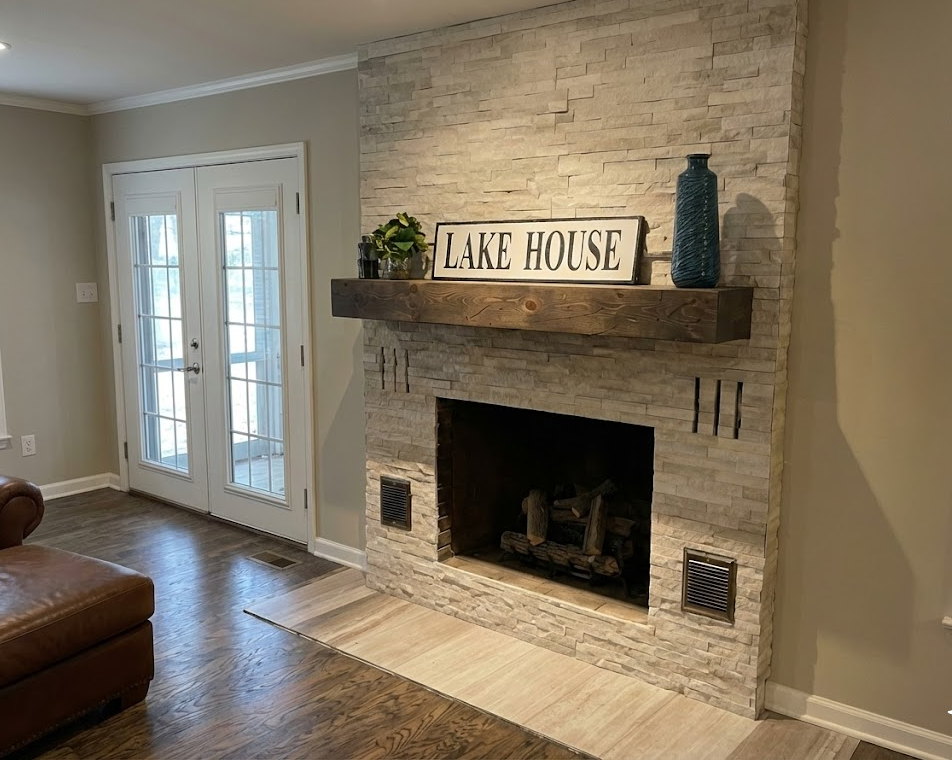
A fireplace should feel intentional, not like an afterthought.
In many homes, the fireplace is one of the most visible surfaces in the living room. It anchors the seating area, draws the eye, and often sits on the same wall as built-ins, a mantel, artwork, or a television. When the fireplace looks unfinished, dated, or builder-grade, the entire room can feel less complete.
That is why fireplace tile can be such a high-impact upgrade.
A kitchen backsplash improves one of the most-used rooms in the home. Fireplace tile does something different. It creates a focal point. It gives the living room structure, texture, height, and a more finished appearance.
For Charlotte-area homeowners with outdated or basic fireplaces, the right tile design can make the room feel more custom without requiring a full living room remodel.
Why Fireplace Tile Has Such a Strong Visual Impact
A fireplace is rarely a background detail.
Even when it is simple, it usually sits in a central location. The wall around it often becomes the visual anchor for the room. That means the fireplace finish affects how the living room feels as a whole.
Fireplace tile can change:
- The style of the room
- The level of visual warmth
- The sense of height
- The balance between the fireplace and surrounding walls
- How custom the living room feels
- Whether the fireplace looks updated or forgotten
- How the room photographs
- How the space feels from the kitchen, entry, or open living area
This is especially important in open-concept homes where the fireplace can be seen from multiple angles.
A builder-grade fireplace may technically function, but visually it may not match the rest of the home. Tile gives homeowners a way to make the fireplace look more intentional and connected to the room.
Fireplace Tile Should Fit the Room, Not Just the Trend
Fireplace tile should not be chosen only because it looks good in a photo.
The right material depends on the architecture of the home, the size of the wall, the firebox, the mantel, the flooring, the surrounding furniture, the ceiling height, and the overall design style.
A fireplace in a warm traditional home may need a different material than a fireplace in a modern South Charlotte home, a lake-area living room in Cornelius or Davidson, or a newer suburban home in Fort Mill or Tega Cay.
Before choosing tile, homeowners should consider:
- Is the fireplace meant to feel calm or dramatic?
- Should the tile go only around the surround or full height?
- Will there be a mantel?
- Is there a television above the fireplace?
- Are there built-ins on either side?
- Is the room traditional, transitional, modern, organic, or farmhouse-inspired?
- Does the room need texture, contrast, warmth, or cleaner lines?
- How much maintenance is acceptable?
- What edge details and transitions will be visible?
The best fireplace tile feels like it belongs in the home. It should not look like a separate design idea pasted onto the wall.
Large Format Fireplace Tile
Large format tile is one of the strongest options for a clean, elevated fireplace.
It creates a more continuous surface with fewer grout lines. This can make the fireplace feel modern, calm, and more architectural.
Large format fireplace tile works well for:
- Modern living rooms
- Transitional homes
- Full-height fireplace walls
- Fireplace surrounds with clean lines
- Homes where fewer grout lines are preferred
- Rooms that need a quieter focal point
- Marble-look or stone-look designs
Large format tile can be especially effective when the fireplace wall needs to feel polished without becoming overly decorative.
The main consideration is planning. Larger tile pieces require careful layout, wall preparation, edge planning, and clean cuts around the firebox, mantel, hearth, or surrounding trim.
When installed well, large format tile can make a fireplace feel refined and current without needing a complicated pattern.
Marble-Look Porcelain Fireplace Tile
Marble-look porcelain is popular because it can create an elegant stone-inspired fireplace without some of the maintenance concerns of natural marble.
It can feel classic, transitional, or modern depending on the veining, finish, tile size, and layout.
Marble-look porcelain works well for homeowners who want:
- A refined fireplace surround
- A clean luxury look
- Soft movement without heavy texture
- A lighter living room focal point
- A stone-inspired design
- A material that can pair well with neutral interiors
This material can be used around the fireplace opening, on a full-height wall, or as part of a more minimal surround.
The key is choosing the right veining and scale. A bold marble-look tile can become dramatic. A softer marble-look porcelain can feel calm and timeless. The grout color, edge trim, and tile layout all affect whether the final result feels polished or overly busy.
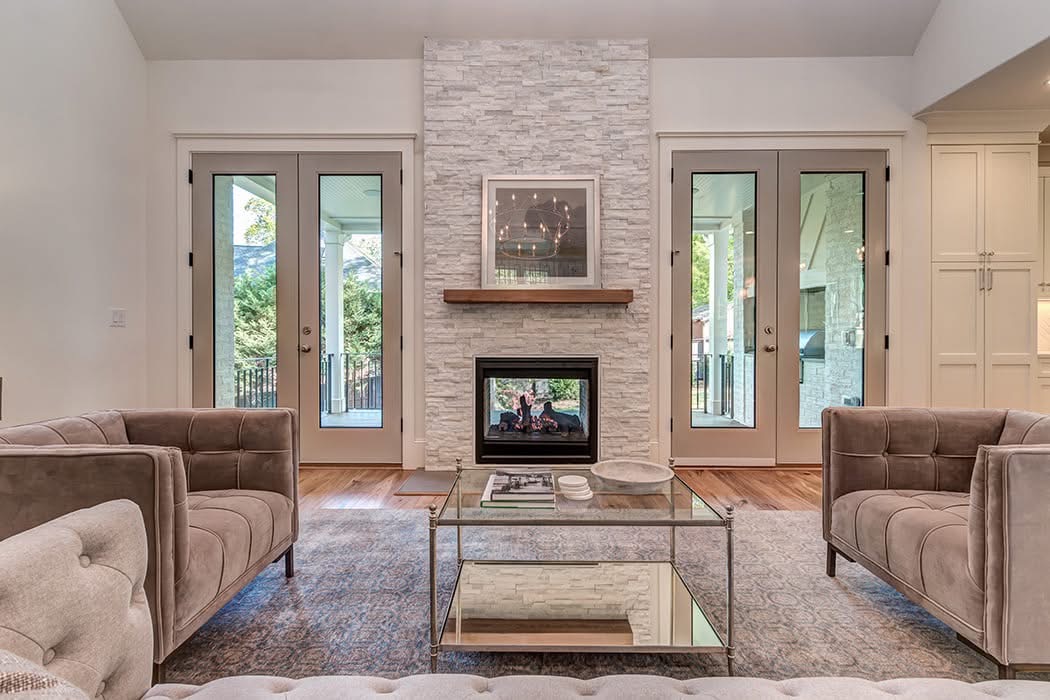
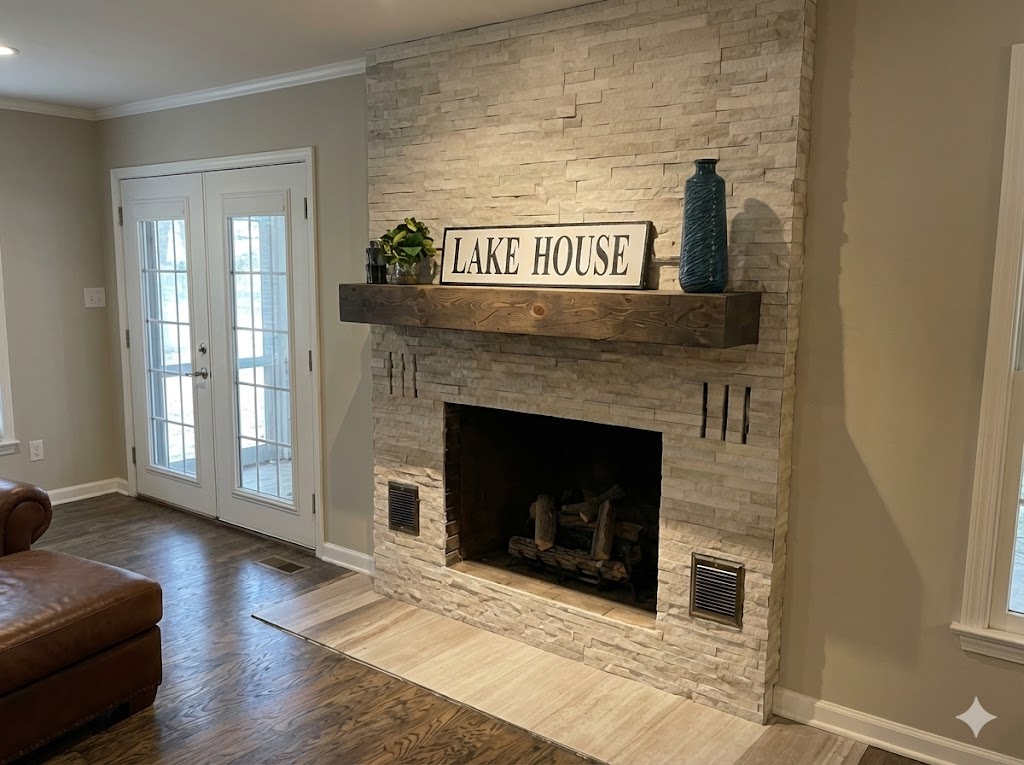
Stacked Stone Fireplace Tile
Stacked stone can add texture, depth, and a natural feel to a fireplace.
It is often used when homeowners want the fireplace to feel warmer, more rustic, organic, or substantial. It can work well in certain transitional, mountain-inspired, farmhouse, or natural-material homes.
Stacked stone fireplace tile may be a good fit for:
- Living rooms that need texture
- Homes with wood beams or natural finishes
- Fireplaces that feel too flat
- Rooms with neutral furniture and simple walls
- Homeowners who want a warmer focal point
- Designs that call for a more substantial surround
The main risk with stacked stone is visual weight.
If the stone is too heavy, too dark, too rough, or too busy for the room, it can overpower the space. In some homes, a cleaner stone-look tile or large format textured tile may create a more updated version of the same idea.
Stacked stone can be beautiful, but it should be selected with the room's scale and style in mind.
Fluted Tile Fireplace Designs
Fluted tile adds vertical texture and shadow.
It can make a fireplace feel more custom without relying on strong color or heavy pattern. Because the texture runs vertically, fluted tile can also help draw the eye upward.
Fluted tile works well for:
- Modern organic living rooms
- Transitional homes
- Fireplace feature walls
- Rooms that need subtle texture
- Neutral palettes
- Designs with clean furniture and warm materials
- Homeowners who want detail without a busy pattern
This type of tile is often strongest when used with restraint. The texture itself provides movement, so the surrounding design should usually stay clean.
The installation details matter. Fluted tile needs careful layout, clean edges, and thoughtful transitions. If the tile ends awkwardly or the edge detail is not planned, the texture can make the unfinished areas more noticeable.
Slab-Inspired Fireplace Tile
Slab-inspired fireplace tile creates the look of a larger continuous surface.
This may involve large format porcelain, stone-look tile, marble-look panels, or other materials designed to reduce grout lines and create a more seamless appearance.
Slab-inspired fireplace tile works well for:
- Luxury transitional homes
- Modern living rooms
- Full-height fireplace walls
- Clean fireplace surrounds
- Homes with minimal trim
- Designs where the fireplace should feel architectural
- Rooms where the homeowner wants a polished focal point
The appeal is the clean visual surface.
The planning is important because seams, veining direction, firebox cuts, edges, and transitions all affect the final look. A slab-inspired fireplace should feel intentional from top to bottom, not like large pieces were placed without a plan.
This is a strong option for homeowners who want the fireplace to look upscale but not overly decorative.
Clean Modern Fireplace Surrounds
A clean modern fireplace surround does not need to be complicated.
Sometimes the strongest design is a simple tile with controlled proportions, minimal grout contrast, and sharp transitions.
Clean modern surrounds often use:
- Large format porcelain
- Matte tile
- Stone-look tile
- Concrete-look tile
- Marble-look tile
- Neutral ceramic or porcelain
- Minimal grout contrast
- Simple edge profiles
This approach works well when the living room already has strong furniture, lighting, built-ins, or architectural details.
The goal is not to make the fireplace loud. The goal is to make it feel finished.
A clean surround can be especially effective in newer homes where the original fireplace feels plain but the homeowner does not want a dramatic feature wall.
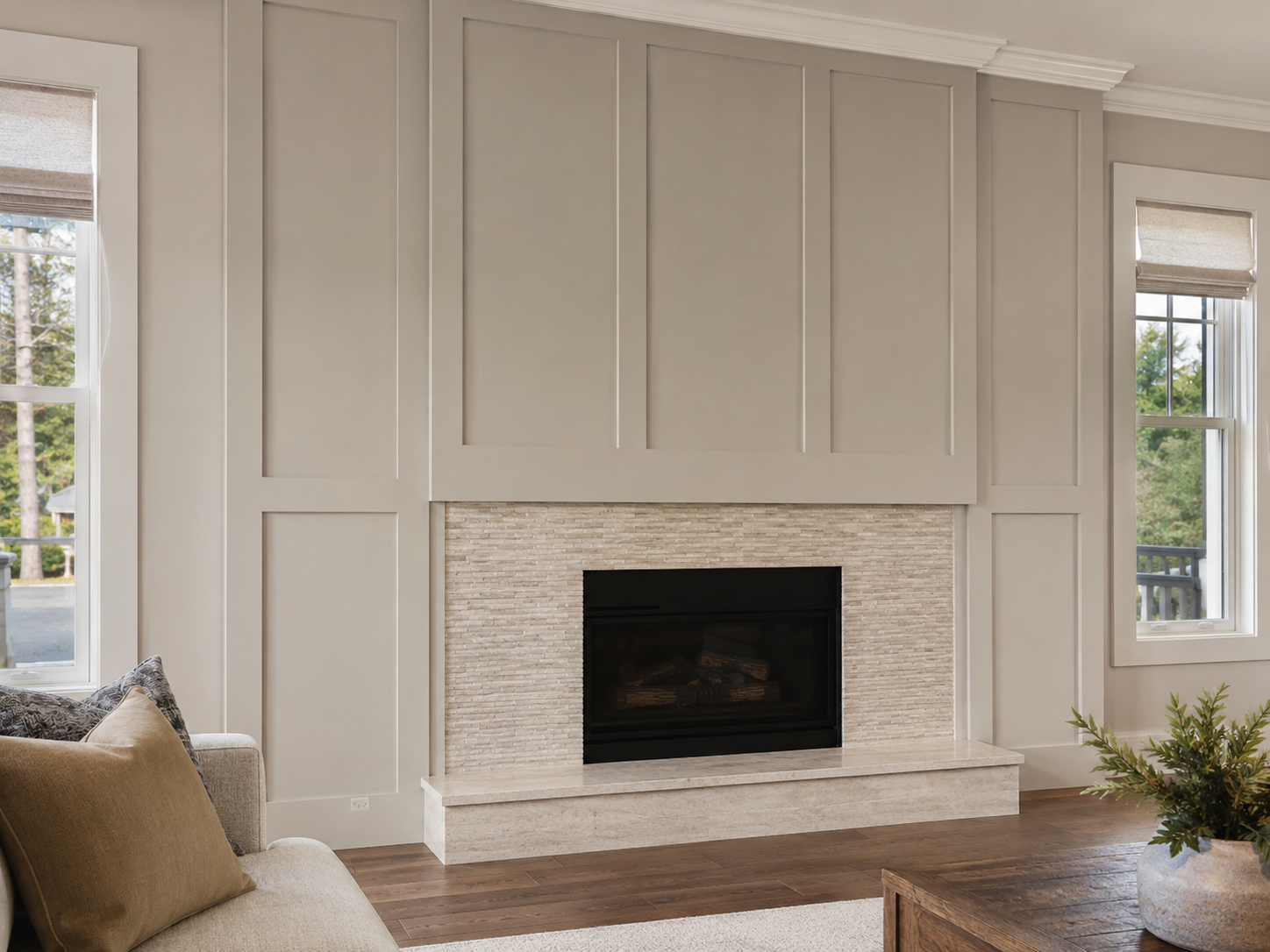
Full-Height Fireplace Feature Walls
A fireplace feature wall extends tile above the firebox, often toward the ceiling.
This can make the room feel taller and more custom, especially if the fireplace wall is highly visible.
Full-height fireplace tile works well when:
- The ceiling height supports it
- The fireplace wall needs more presence
- The room lacks a focal point
- The homeowner wants a more custom living room
- The tile material has enough scale to carry the wall
- The design works with surrounding windows, built-ins, or furniture
This type of project needs careful proportion planning.
The tile should relate to the width of the fireplace, the height of the ceiling, the mantel or TV placement, and the surrounding walls. If the proportions are off, a full-height feature can feel too narrow, too heavy, or disconnected from the room.
When planned well, a fireplace feature wall can make the entire living area feel more complete.
Fireplace Surrounds Without a Full Feature Wall
Not every fireplace needs tile from floor to ceiling.
In many homes, a focused fireplace surround is the better choice. This may include tile around the firebox, a hearth area, or a more contained design that works with an existing mantel.
A fireplace surround may be the better option when:
- The room is smaller
- The existing mantel is staying
- The homeowner wants a more traditional look
- The fireplace should feel updated but not dominant
- The wall already has built-ins, windows, or artwork
- A full feature wall would feel too heavy
A well-designed surround can still make the fireplace feel finished. The key is clean scale, proper material selection, and thoughtful edge details.
A smaller scope does not have to feel basic when the installation is planned well.
Tile Around a TV Fireplace Wall
Many homeowners have a television above or near the fireplace.
That can make the design more complicated because the tile needs to work with both the fireplace and the screen. The wall should feel balanced, not crowded.
When planning tile around a TV fireplace wall, consider:
- TV height
- Firebox size
- Mantel or no mantel
- Wall width
- Tile scale
- Tile reflectivity
- Grout contrast
- Cable or outlet access
- Built-ins or media storage
- Viewing comfort
Glossy tile may reflect light. Busy tile may compete with the TV. A very strong pattern may make the wall feel visually crowded.
For many TV fireplace walls, a cleaner tile, softer grout, and more controlled layout often work better than a highly decorative material.
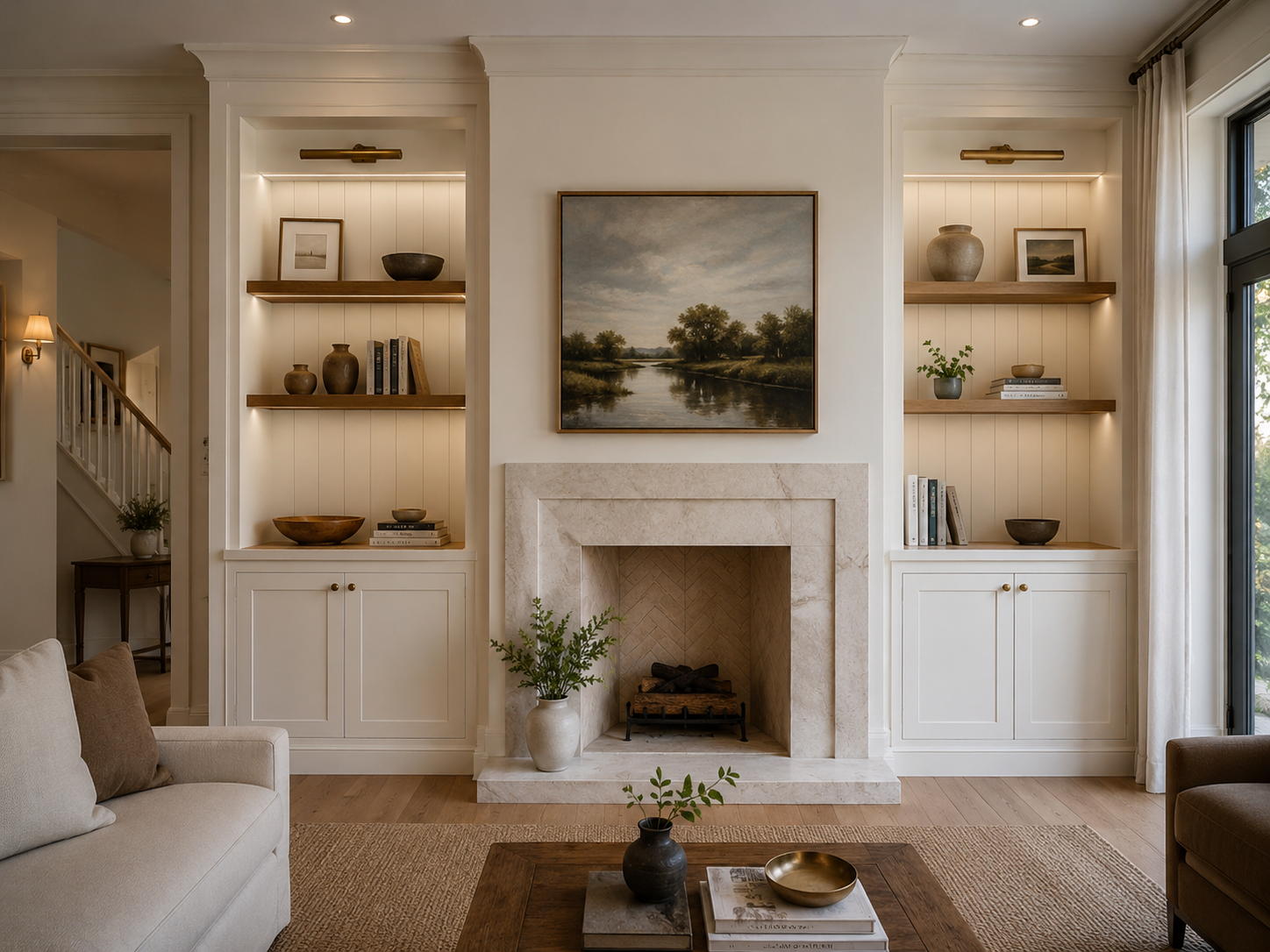
Fireplace Tile With Built-Ins
Built-ins can make a fireplace wall look more custom, but they also make tile planning more important.
The tile needs to relate to cabinetry, shelves, wood tones, paint color, hardware, and the overall wall width.
When a fireplace is framed by built-ins, tile can help define the center of the wall. It can also add contrast or texture between the cabinetry.
Important details include:
- Tile width
- Tile height
- How the tile meets the built-ins
- Whether the mantel is staying
- Edge and trim decisions
- Grout color
- Whether the tile should be subtle or bold
- How the tile relates to cabinet color
The fireplace should feel like part of the built-in wall, not a separate project placed in the middle.
Updating a Builder-Grade Fireplace
Many newer homes include fireplaces that are functional but visually basic.
They may have a simple tile surround, plain builder stone, a basic mantel, or a finish that does not match the homeowner's current style.
Updating a builder-grade fireplace can make sense when:
- The living room feels unfinished
- The fireplace does not match upgraded furniture or lighting
- The current tile feels dated
- The surround is too plain
- The fireplace wall lacks a focal point
- The homeowner wants a more custom appearance
- The home has an open floor plan where the fireplace is highly visible
This type of upgrade is common in suburban homes because the fireplace often sits in the main living area.
A focused tile update can make the room feel more personal without changing the entire layout.
Choosing the Right Fireplace Tile Material
The best fireplace tile material depends on the style of the room and the type of fireplace project.
Popular options may include:
- Porcelain tile
- Ceramic tile
- Marble-look porcelain
- Natural stone
- Stacked stone
- Fluted tile
- Large format tile
- Textured tile
- Concrete-look tile
- Slab-inspired porcelain
Each material has a different look and different installation considerations.
Homeowners should think about:
- Heat exposure and fireplace type
- Manufacturer requirements
- Material suitability
- Tile size and thickness
- Surface texture
- Cleaning needs
- Edge details
- Grout color
- Mantel and hearth design
- Long-term style fit
The tile should be appropriate for the fireplace and the room. Material selection should be reviewed before installation begins.
Safety, Clearance, and Fireplace Requirements Matter
Fireplace tile is a design upgrade, but it still needs to respect the fireplace system.
Before tile is installed, the project should account for fireplace type, manufacturer requirements, combustible clearances, surrounding materials, and any existing mantel or trim conditions.
This is especially important when updating:
- Gas fireplaces
- Electric fireplaces
- Wood-burning fireplaces
- Fireplace inserts
- Mantels
- Hearth areas
- Surrounding trim
- TV walls
The visual design matters, but it cannot be separated from the practical requirements of the fireplace.
Homeowners should avoid choosing a fireplace material or mantel detail based only on appearance. The project needs to be reviewed for the actual fireplace conditions and installation requirements.
Grout and Edge Details Affect the Final Look
Just like with backsplashes, grout and edges matter on fireplace tile.
Grout can make the tile feel soft, defined, graphic, or busy. Edge details determine whether the fireplace feels finished or incomplete.
Important finish decisions include:
- Grout color
- Grout joint size
- Tile trim
- Outside corners
- Firebox returns
- Hearth transitions
- Mantel transitions
- Wall-to-tile edges
- Built-in transitions
- Tile thickness
These details may not be the first thing homeowners think about, but they are often what separate a polished fireplace tile project from a basic one.
A fireplace is a focal point. The details need to hold up visually. For more on finish quality, see what makes a tile installation look high-end. For grout direction, see how to choose grout color for a backsplash or fireplace.
Common Fireplace Tile Mistakes to Avoid
Fireplace tile can lose its impact when the design is not planned around the room.
Common mistakes include:
- Choosing tile that is too small for a large wall
- Choosing tile that is too busy for the living room
- Ignoring fireplace clearances or requirements
- Not planning around a mantel or TV
- Using grout that makes the tile look too harsh
- Ending the tile in an awkward location
- Forgetting edge trim or finished corners
- Choosing a material that does not fit the home's style
- Making the fireplace wall too heavy visually
- Treating the surround like a small tile patch instead of a focal point
A fireplace should look designed from the beginning. It should not feel like leftover tile was added around the firebox.
Which Fireplace Tile Idea Is Best for Your Home?
The best fireplace tile idea depends on the room.
A large open living room may support a full-height feature wall. A smaller family room may only need a clean surround. A modern home may work well with large format porcelain. A warm transitional home may need textured tile or natural stone. A builder-grade fireplace may only need a cleaner tile, better proportions, and a more intentional edge detail.
Before choosing a direction, ask:
- Is the fireplace currently too plain, too dated, or too heavy?
- Should the tile be subtle or dramatic?
- Does the wall need more height?
- Will the fireplace be viewed from the kitchen or entry?
- Is there a TV, mantel, or built-in cabinetry?
- Does the material fit the home's style?
- Will the grout and edges look finished?
- Does the fireplace system affect material or clearance decisions?
The right fireplace tile should make the room feel more complete.
How CBC Helps Homeowners Plan Fireplace Tile
CBC approaches fireplace tile as a focal-point finish, not just another tile surface.
That means reviewing the material, layout, scale, trim details, fireplace conditions, and surrounding room design before installation begins.
For a fireplace tile project, CBC can help homeowners think through:
- Surround vs. full feature wall
- Tile material
- Tile size
- Layout direction
- Fireplace opening and firebox details
- Mantel and hearth conditions
- TV or built-in considerations
- Grout color
- Edge and trim details
- Overall room style
- Project scope
The goal is to create a fireplace that feels intentional, balanced, and appropriate for the home.
CBC is known for backsplash work, but the same detail control matters on fireplace projects. Clean layout, careful cuts, thoughtful edges, and finished transitions are just as important when the tile becomes the focal point of the living room.
Explore fireplace tile services to review scope, materials, and project direction. View completed fireplace and tile projects to study layout, scale, and finish details.
Final Takeaway
A fireplace should not feel like an afterthought.
With the right tile, it can become one of the most finished and intentional details in the home. Large format tile can create a clean architectural look. Marble-look porcelain can feel refined. Stacked stone can add texture and warmth. Fluted tile can bring subtle vertical detail. Slab-inspired tile can make the wall feel polished and seamless. A clean modern surround can update the room without overcomplicating it.
The best fireplace tile idea is the one that fits the room, respects the fireplace conditions, and creates the right focal point for the home.
A well-planned fireplace tile upgrade can make the living room feel more complete without requiring a full remodel.
Want Your Fireplace to Feel Like a Finished Focal Point?
CBC helps homeowners plan fireplace tile upgrades with the right material, layout, scale, edge details, and finish direction.
Request a fireplace tile estimate to review your fireplace surround, feature wall, or living room tile project.
FAQ
What fireplace tile makes a living room look more finished?
Large format tile, marble-look porcelain, textured tile, fluted tile, stacked stone, and clean modern surrounds can all make a fireplace look more finished. The best choice depends on the room style, fireplace size, mantel, surrounding walls, and whether the homeowner wants a subtle surround or a stronger focal point.
Is large format tile good for a fireplace?
Large format tile can be a strong fireplace option when the homeowner wants fewer grout lines and a cleaner, more architectural look. It works especially well for modern and transitional fireplace surrounds or full-height feature walls, but it requires careful layout, cutting, and edge planning.
Should fireplace tile go all the way to the ceiling?
It depends on the room. Full-height fireplace tile can make a living room feel taller and more custom, especially if the wall is highly visible. A smaller surround may be better if the room is more traditional, the wall already has built-ins, or a full feature wall would feel too heavy.
Can you update a builder-grade fireplace without remodeling the whole room?
Yes. Replacing or upgrading the fireplace tile can make a builder-grade fireplace feel more intentional without changing the entire living room. The right tile, grout, edge detail, and proportions can create a more finished focal point with a focused project scope.
What should homeowners consider before choosing fireplace tile?
Homeowners should consider the fireplace type, manufacturer requirements, material suitability, mantel and hearth conditions, wall size, TV placement, built-ins, grout color, edge details, and overall room style before choosing fireplace tile.