Pricing and Planning
How Much Does Fireplace Tile Installation Cost?
Fireplace tile pricing depends heavily on scope, surface height, material selection, demolition, prep work, hearth details, mantel coordination, and finish level. This guide explains CBC's fireplace installation planning ranges and what homeowners should understand before comparing quotes.
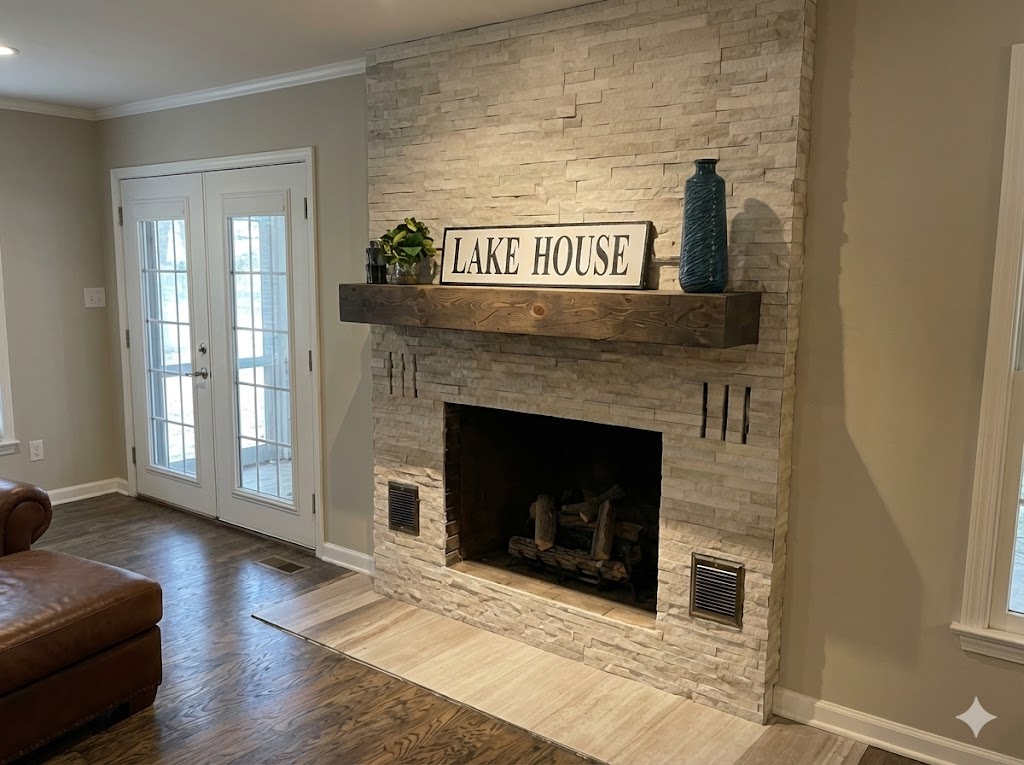
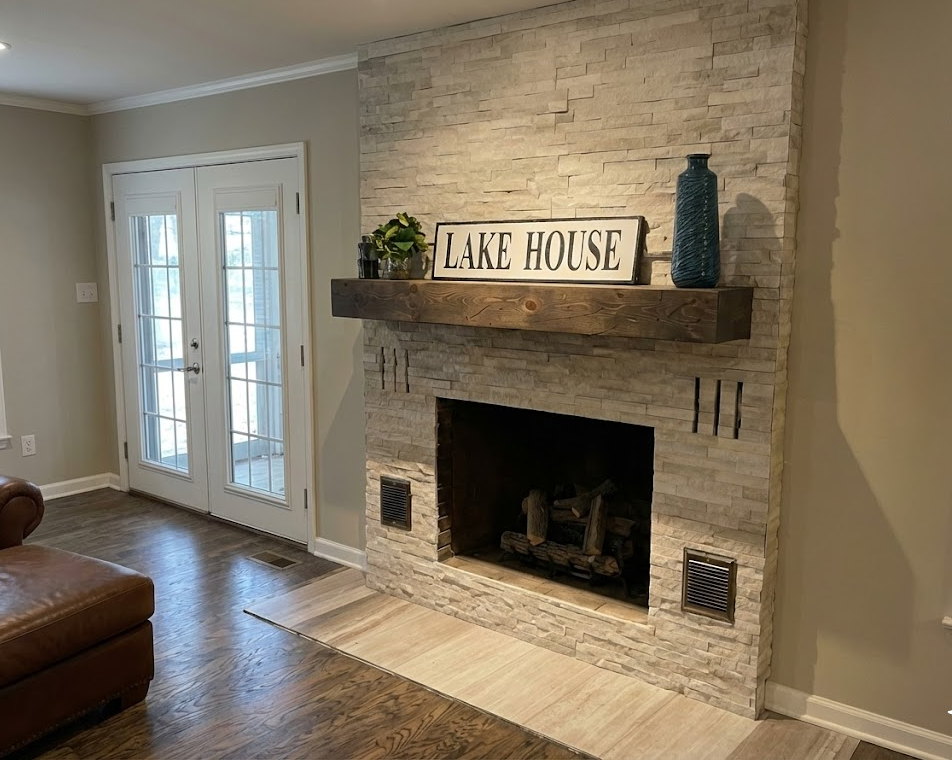
Fireplace tile pricing is not as simple as measuring a few square feet around the firebox.
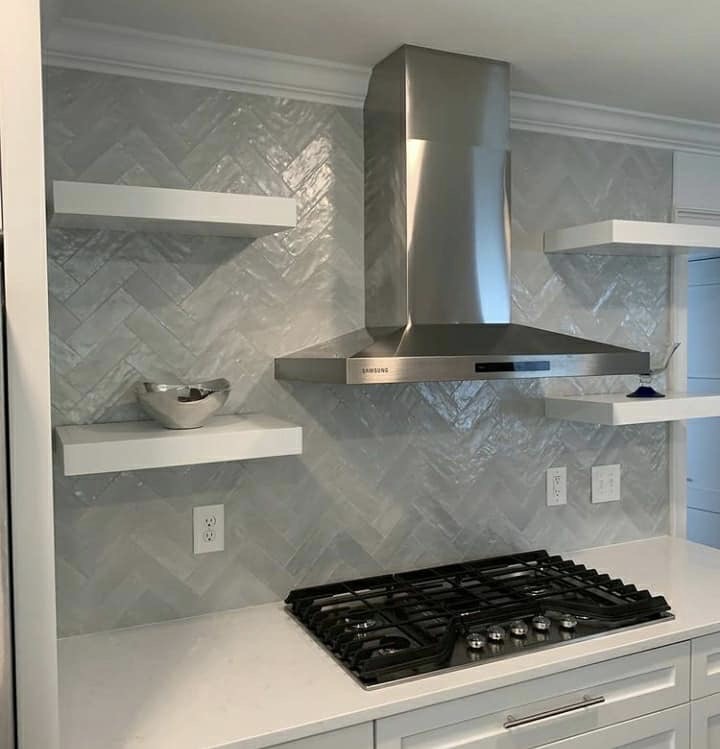
A backsplash is usually a contained surface between the countertop and cabinets. A fireplace can be much more variable. One project may involve a small tile refresh around an existing surround. Another may include a floor-to-ceiling feature wall, large-format material, hearth work, mantel coordination, built-ins, specialty edges, or multiple finish systems.
That is why fireplace tile installation cost depends less on square footage alone and more on the full project scope.
For Charlotte-area homeowners planning a living room upgrade, the right question is not only, "How much does it cost to tile a fireplace?" The better question is, "What level of fireplace project are we actually planning?"
The Short Answer: Fireplace Tile Cost Depends on Scope
CBC uses fireplace planning ranges to help homeowners understand the likely investment before a project-specific review.
These ranges are meant for planning, not as a final quote. A final proposal depends on the fireplace dimensions, surface condition, material selection, demolition needs, hearth details, ceiling height, layout complexity, mantel coordination, built-in elements, access, and the overall scope of work.
CBC's general fireplace tile planning ranges are:
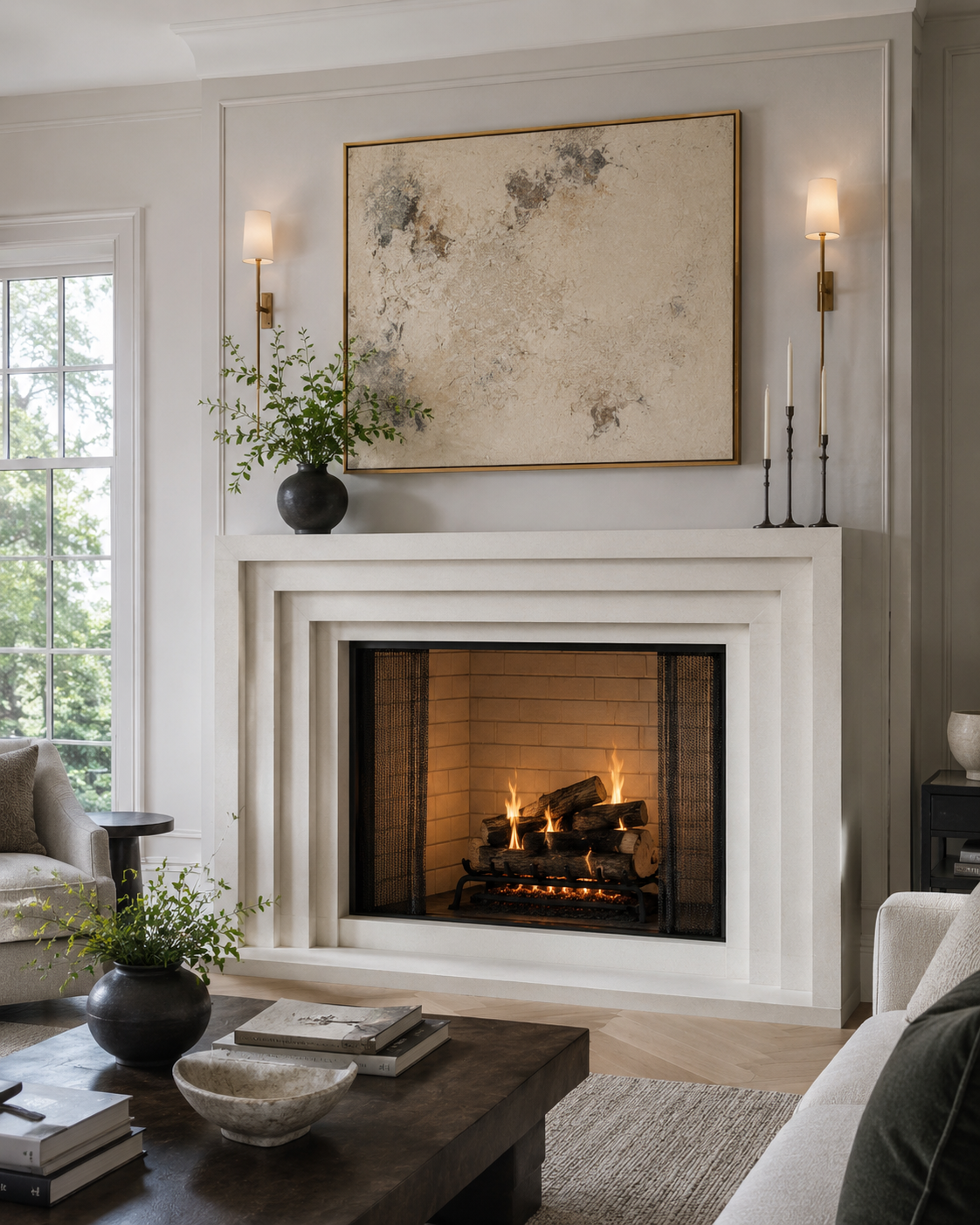
Tier 1: Fireplace Surround Refresh
Typical planning range: $2,000–$3,500
This range is usually best for a focused update to an existing fireplace area where the layout is straightforward and the scope is clearly contained.
Examples may include:
- Standard tile surround
- Small stone or tile refresh
- Simple hearth surface
- Basic edge and termination details
- Coordination with an existing mantel
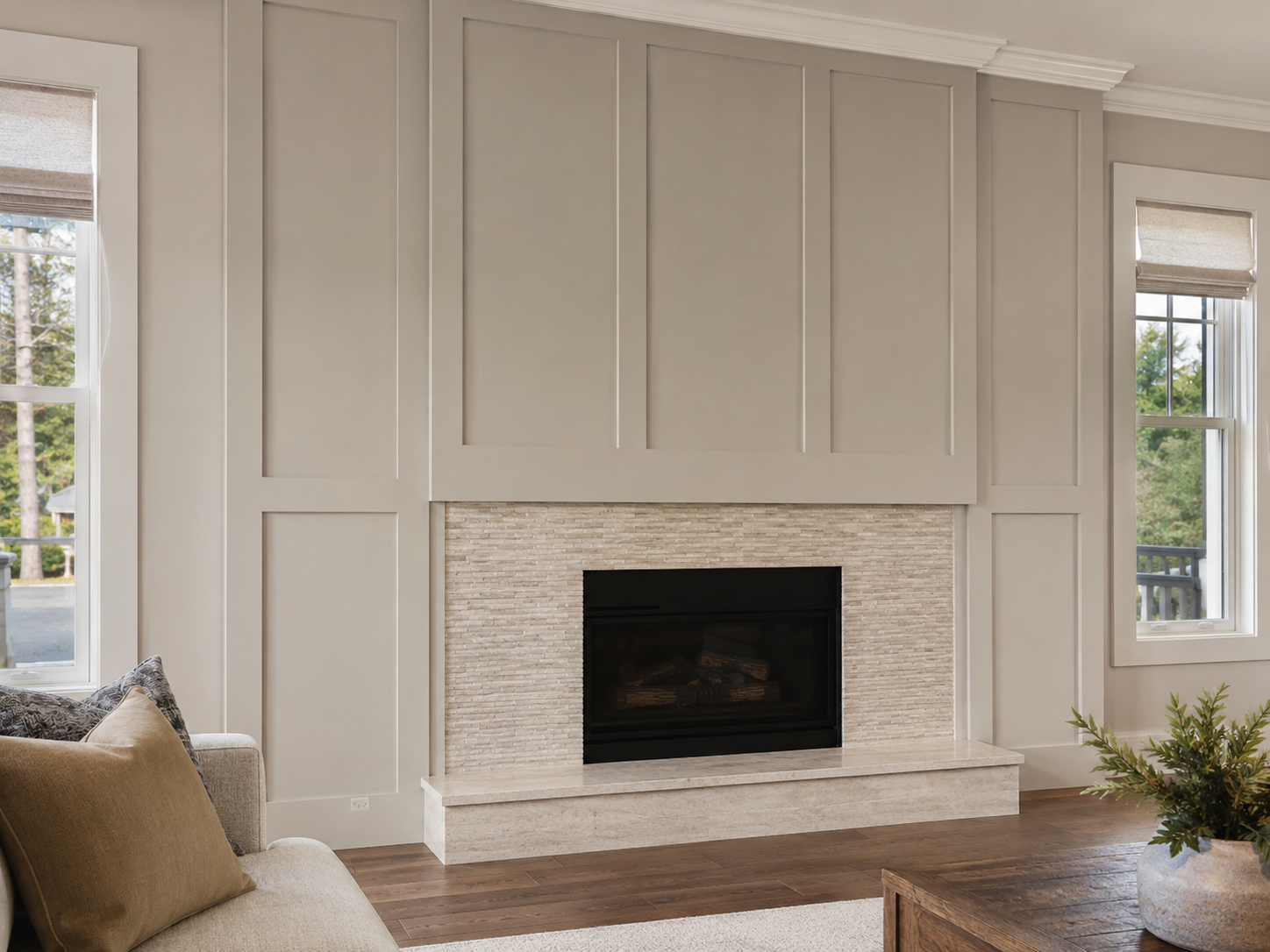
Tier 2: Standard Fireplace Upgrade
Typical planning range: $3,500–$6,500
This range is usually best for fireplace projects with more surface area, more material coordination, or more detailed planning than a basic surround refresh.
Examples may include:
- Full-height surround below the mantel
- Coordinated surround and hearth
- Large-format tile installation
- Standard stone or masonry veneer
- Mantel removal or replacement coordination
- More detailed edge and transition work
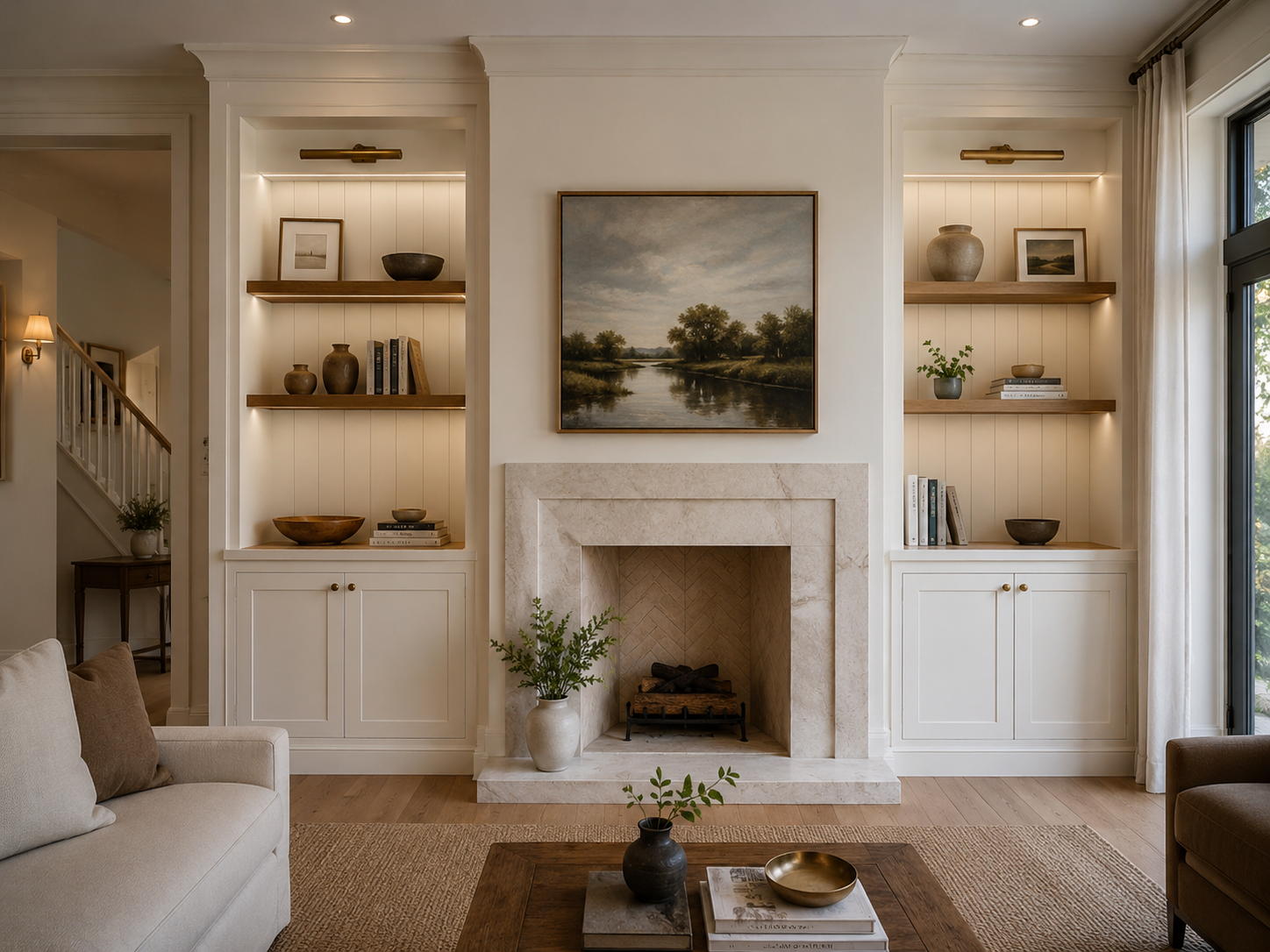
Tier 3: Enhanced Fireplace Feature
Typical planning range: $6,500–$10,500
This range is usually best for higher-scope fireplace work where the fireplace becomes a true focal point.
Examples may include:
- Floor-to-ceiling tile or stone
- Fireplace feature wall
- Large-format slab or panel appearance
- Integrated mantel or floating shelf coordination
- Built-in shelving coordination
- Mixed-material fireplace design
- Detailed hearth and edge conditions
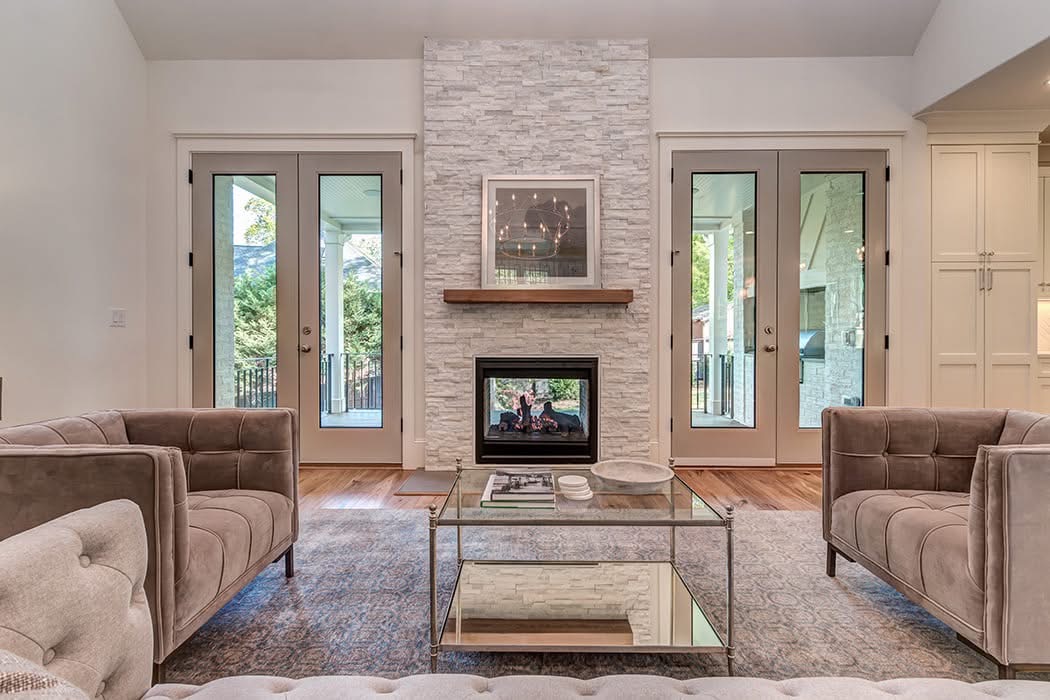
Tier 4: Signature Fireplace Wall
Custom projects start at: $10,500
This range is for highly customized fireplace walls that require project-specific planning and detailed scope confirmation.
Examples may include:
- Custom floor-to-ceiling fireplace walls
- Integrated cabinetry or built-ins
- Mixed tile, stone, wood, or panel systems
- Oversized or specialty-format materials
- Custom mantels and floating shelves
- Multi-element entertainment walls
- Detailed architectural finish systems
Signature fireplace walls are not priced like a basic tile surround because the project may involve multiple surfaces, multiple materials, additional coordination, custom finish details, and a higher level of planning.
What CBC's Fireplace Planning Ranges Generally Include
CBC's fireplace planning ranges generally reflect the installation services needed for a properly planned fireplace surface or feature-wall project.
Depending on the scope, a fireplace tile proposal may include:
- Dust-control preparation and protection
- Professional installation labor
- Standard setting and installation supplies
- Basic surface preparation
- Layout and finish-detail planning
- Final cleanup
The purpose of the planning range is to give homeowners a realistic starting point before the details are reviewed.
A fireplace project should not be priced only as "tile on a wall." The work often involves visible surfaces, focal-point alignment, edge details, heat-related considerations, surrounding architecture, and finish coordination.
What Is Usually Purchased Separately
Tile, stone, grout material, edging, mantels, shelving, cabinetry, fireplace units, and other finish components are purchased separately unless they are specifically included in the written proposal.
This is important because material and finish selections can change the overall project investment significantly.
A simple tile surround and a full-height stone fireplace wall may both be fireplace projects, but the scope, materials, handling, prep, and finish coordination are very different.
Before comparing quotes, homeowners should clarify whether the proposal includes only installation labor and standard supplies, or whether it also includes selected finish materials.
Why Fireplace Tile Pricing Varies So Much
Fireplace projects vary more than many homeowners expect.
A backsplash usually has a predictable height and a defined work area. A fireplace may involve a small surround, a hearth, a mantel, a vertical wall, a built-in feature, a TV wall, or a full architectural focal point.
Pricing can change based on:
- Fireplace dimensions
- Wall height
- Surface area
- Existing material removal
- Substrate condition
- Tile or stone material
- Large-format or specialty material handling
- Hearth details
- Mantel coordination
- Edge and trim details
- Built-in elements
- Ceiling height
- Access to the work area
- Layout complexity
- Firebox conditions
- Overall project scope
That is why two fireplace tile projects can have very different costs even if they look similar in a photo.
The visible surface is only part of the project. The preparation, coordination, and finish details drive much of the scope.
Surface Area and Height Matter
Surface area matters, but height often matters just as much.
A small surround around the firebox is usually a different scope than a tile wall extending to the ceiling. A floor-to-ceiling fireplace feature may require more layout planning, more material, more cuts, more staging, and more attention to proportions.
Height can affect:
- Material handling
- Layout planning
- Access
- Installation time
- Wall preparation
- Seam placement
- Firebox alignment
- Edge details
- Visual balance
- Coordination with mantels, shelves, or TVs
A tall fireplace wall also becomes more visually dominant. That means the layout and finish quality need to hold up from top to bottom.
A floor-to-ceiling feature wall should feel proportional to the room, not just covered in tile.
Material Selection Affects Cost
Material choice is one of the biggest fireplace pricing factors.
Different materials require different levels of handling, cutting, layout control, and finish planning.
Common fireplace materials may include:
- Ceramic tile
- Porcelain tile
- Large-format porcelain
- Marble-look porcelain
- Natural stone
- Stacked stone
- Stone veneer
- Fluted tile
- Textured tile
- Slab-inspired panels
- Mixed-material finishes
A standard ceramic or porcelain tile surround may be more controlled than a large-format tile wall, natural stone feature, stacked stone installation, or mixed-material fireplace system.
Material selection can affect:
- Cutting difficulty
- Edge detail
- Weight and handling
- Wall prep requirements
- Layout planning
- Grout joint size
- Waste allowance
- Finish transitions
- Installation time
- Maintenance expectations
The tile or stone should be selected for both the design and the installation requirements.
Demo and Existing Fireplace Conditions Can Change the Scope
Many fireplace upgrades begin with an existing surround.
That existing material may need to be removed before the new tile or stone can be installed. The condition underneath is not always known until removal begins.
Demo can affect the project if there is:
- Existing tile
- Brick
- Stone
- Drywall damage
- Uneven substrate
- Adhesive residue
- Improper previous work
- Mantel or trim interference
- Hearth material that needs modification
- Surrounding surfaces that need protection
A simple visual update can become more involved if the existing surface is not suitable for the new installation.
This does not mean the project is a problem. It means the proposal needs to account for real site conditions.
Substrate Prep Is Part of the Finished Result
The surface behind the tile matters.
A fireplace finish needs a suitable substrate based on the material, fireplace type, manufacturer requirements, and project scope. If the substrate is uneven, damaged, poorly prepared, or inappropriate for the selected material, the finished tile may not look or perform as expected.
Prep may involve:
- Surface cleaning
- Removal of loose material
- Flattening or correcting problem areas
- Repairing damaged surfaces
- Preparing for proper bonding
- Confirming material suitability
- Reviewing the fireplace opening and surrounding conditions
Surface prep is not the most exciting line item, but it is one of the reasons a fireplace tile project looks clean when finished.
A polished feature wall starts with the surface behind the tile.
Hearth Details Can Add Complexity
The hearth is often one of the most overlooked parts of fireplace pricing.
Some projects include only the vertical surround. Others include the hearth surface, hearth face, raised hearth, floor transition, or a custom hearth detail.
Hearth details can affect:
- Material quantity
- Edge finishing
- Tile cuts
- Transition planning
- Height conditions
- Safety and clearance review
- Coordination with flooring
- Coordination with the firebox
- Overall project labor
A hearth may seem like a small area, but it often has multiple visible edges and transitions. Those details need to be planned carefully so the fireplace feels finished.
Mantel Coordination Can Affect Scope
Mantels are a major fireplace design element.
Some projects keep the existing mantel. Others require mantel removal, replacement coordination, floating shelf coordination, or planning around a future mantel.
Mantel coordination can affect:
- Tile height
- Tile stopping points
- Edge details
- Demo needs
- Surface prep
- Layout planning
- Firebox proportions
- Surround dimensions
- Material transitions
Mantels, shelves, and cabinetry are typically separate finish components unless included in the written proposal. However, the tile work still needs to be planned around them.
If the mantel is not considered early, the finished fireplace can feel disconnected or incomplete.
Built-Ins, TVs, and Shelving Increase Coordination
Many fireplace walls include more than the fireplace itself.
They may include:
- Built-in shelving
- Cabinets
- Floating shelves
- A television
- Media wiring
- Mantel details
- Wall panels
- Adjacent trim
- Custom millwork
These elements can make the fireplace wall feel more custom, but they also increase coordination.
A fireplace feature wall with built-ins is not just a tile installation. It is a focal wall with multiple finish relationships.
The tile needs to meet surrounding materials cleanly, align with visible centerlines, avoid awkward transitions, and support the overall architecture of the room.
That is why built-in and entertainment-wall projects often fall into higher planning ranges.
Edge and Trim Details Matter on Fireplaces
Fireplaces have highly visible edges.
Tile may need to end at a wall, return around a corner, meet a firebox, stop at a mantel, transition to a hearth, or align with built-ins.
Common edge decisions include:
- Tile trim profiles
- Outside corner treatment
- Bullnose pieces
- Mitered edges when appropriate
- Firebox return details
- Hearth edges
- Tile-to-wall transitions
- Tile-to-mantel transitions
- Tile-to-cabinet transitions
Poor edge planning can make a fireplace look unfinished even if the tile itself is attractive.
The more visible the fireplace is, the more important these details become. For more on finish quality, see what makes a tile installation look high-end.
Layout Complexity Can Change the Price
Fireplace tile needs to be laid out around the most visible parts of the wall.
That may include the firebox, mantel, hearth, ceiling line, built-ins, TV, shelves, or surrounding trim.
Complex layout conditions may include:
- Centered firebox alignment
- Large-format material
- Veining direction
- Stone variation
- Fluted tile
- Stacked stone
- Patterned tile
- Mixed materials
- Full-height walls
- Detailed hearth returns
- Specialty edges
A simple surround can still require careful layout, but a full fireplace feature wall usually needs more planning before installation begins.
The finished tile should feel centered, balanced, and intentional.
Fireplace Type and Safety Requirements Matter
Fireplace tile is visual, but it also needs to respect the fireplace system.
Before installation, the project should account for the fireplace type, manufacturer requirements, combustible clearances, heat exposure, mantel conditions, and surrounding material requirements.
This is especially important for:
- Gas fireplaces
- Electric fireplaces
- Wood-burning fireplaces
- Fireplace inserts
- Mantel changes
- Hearth modifications
- Surrounding trim
- TV walls
Homeowners should avoid making fireplace finish decisions based on appearance alone. The material and design need to be appropriate for the actual fireplace conditions.
A proper project review helps avoid design choices that may not fit the fireplace system.
Why Online Fireplace Pricing Can Be Misleading
Online fireplace pricing can be difficult to apply to a real project because "fireplace tile installation" can mean many different things.
One guide may refer to a small surround. Another may include stacked stone. Another may assume standard tile. Another may discuss full feature walls, but not include mantels, built-ins, demo, or specialty material handling.
The same phrase can describe very different scopes.
This is why homeowners should be careful when comparing broad pricing examples. A fireplace surround refresh, a standard fireplace upgrade, an enhanced feature wall, and a signature fireplace wall are not the same project.
A useful quote should explain what is included, what is separate, and what assumptions are being made.
How to Compare Fireplace Tile Quotes
When comparing fireplace tile quotes, do not compare only the final price.
Compare the scope behind the number.
A fireplace tile quote should clarify:
- What surface area is included
- Whether demo is included
- What prep work is included
- What material is assumed
- Whether tile, stone, grout, trim, or finish components are separate
- Whether hearth work is included
- Whether mantel coordination is included
- Whether built-in or shelving coordination is included
- How edge details will be handled
- How the layout will be planned
- Whether specialty material handling is included
- What cleanup and protection are included
- What conditions may change the final price
A lower quote may be incomplete. A higher quote should be able to explain what added scope, prep, coordination, or finish detail is included.
The goal is not to choose the most expensive option. The goal is to choose the proposal that matches the fireplace you actually want.
When a Fireplace Surround Refresh Makes Sense
A fireplace surround refresh can be a strong choice when the existing fireplace is mostly functional but visually dated or too basic.
This may be the right scope if:
- The homeowner wants a focused update
- The existing mantel is staying
- The wall does not need major changes
- The project area is clearly defined
- The material direction is straightforward
- The fireplace needs polish, not a full redesign
This can be a practical upgrade for homeowners who want the living room to feel more finished without committing to a full feature wall.
A smaller fireplace project can still look high-end when the material, layout, grout, edge details, and transitions are handled well. For design direction, see fireplace tile ideas for a finished living room.
When a Larger Fireplace Feature Makes Sense
A larger fireplace feature may make sense when the fireplace wall is a major visual anchor in the room.
This may be the right direction if:
- The room lacks a clear focal point
- The fireplace is visible from multiple areas
- The ceiling height supports a taller feature
- The homeowner wants a custom living room feel
- Built-ins, shelves, or a TV are part of the wall
- The existing fireplace feels too small or under-designed
- The material needs more surface area to have impact
Feature walls require more planning, but they can also make the room feel more complete.
For many homeowners, the fireplace is not just a surface to cover. It is the center of the living room.
How to Plan Your Fireplace Tile Budget
Before requesting an estimate, homeowners should gather a few details.
Helpful items include:
- Photos of the existing fireplace
- Approximate fireplace dimensions
- Ceiling height
- Photos of the full wall
- Notes about existing tile, brick, stone, or drywall
- Whether the hearth is staying or changing
- Whether the mantel is staying, moving, or being replaced
- Whether built-ins or shelves are involved
- Whether a TV is part of the wall
- Inspiration photos
- Preferred tile or stone direction
- Desired scope: surround, full-height feature, or custom wall
These details help determine whether the project is closer to a surround refresh, standard upgrade, enhanced feature, or signature fireplace wall.
The clearer the scope, the more useful the estimate will be.
How CBC Approaches Fireplace Pricing
CBC's fireplace pricing approach is designed to help homeowners understand the difference between levels of scope.
A simple surround refresh should not be priced like a custom entertainment wall. A full-height feature wall should not be treated like a small tile surround. A fireplace project with built-ins, mantel coordination, specialty materials, and detailed edges should be reviewed differently from a straightforward tile update.
This distinction protects the homeowner and the finished result.
CBC looks at the fireplace as a focal point, not just a surface. The proposal should reflect the actual work needed to create a clean, finished, intentional fireplace upgrade.
Explore fireplace tile services to review scope and project direction. View completed fireplace and tile projects for reference.
Final Takeaway
Fireplace tile installation cost depends on more than square footage.
The biggest pricing factors are scope, surface height, material selection, demolition, substrate prep, hearth details, mantel coordination, edge finishing, layout complexity, built-in elements, access, and overall finish level.
A focused fireplace surround refresh may be a controlled upgrade. A standard fireplace upgrade may involve a larger surface and more finish coordination. An enhanced feature wall may require more planning around height, architecture, and specialty materials. A signature fireplace wall may involve custom materials, built-ins, shelving, mantels, and multiple integrated finish details.
The best way to understand fireplace pricing is to define what type of fireplace project you want first.
Then compare quotes based on scope, prep, material handling, finish quality, and how complete the proposal is.
Planning a Fireplace Tile Project?
CBC helps homeowners understand fireplace tile scope, surface prep, material direction, hearth details, mantel coordination, and finish expectations before the project begins.
Request a fireplace tile estimate to review your fireplace and determine the right planning range.
FAQ
How much does fireplace tile installation cost?
CBC's fireplace tile planning ranges typically start around $2,000–$3,500 for a focused fireplace surround refresh, $3,500–$6,500 for a standard fireplace upgrade, $6,500–$10,500 for an enhanced fireplace feature, and $10,500+ for signature fireplace wall projects. Final pricing depends on the actual scope, material, prep work, height, hearth details, mantel coordination, built-ins, and finish requirements.
Why does fireplace tile cost more than a backsplash?
Fireplace tile often involves more surface variation, height, material handling, edge detail, hearth conditions, mantel coordination, and architectural planning than a standard backsplash. A fireplace is usually a focal point, so the layout and finish details need to be planned carefully.
Does fireplace tile pricing include the tile and materials?
Tile, stone, grout material, edging, mantels, shelving, cabinetry, fireplace units, and other finish components are purchased separately unless they are specifically included in the written proposal. CBC's planning ranges generally reflect installation services, standard supplies, basic prep, dust-control preparation, and cleanup.
What affects the cost of a fireplace feature wall?
The main cost factors include wall height, surface area, demo, substrate condition, tile or stone material, large-format or specialty material handling, hearth details, mantel coordination, built-ins, TV or shelving coordination, access, edge details, and layout complexity.
Is a full-height fireplace tile wall worth it?
A full-height fireplace tile wall can be worth it when the fireplace is a major focal point, the ceiling height supports the design, and the homeowner wants the living room to feel more finished or custom. It requires more planning than a simple surround, but it can make the room feel more complete when done well.