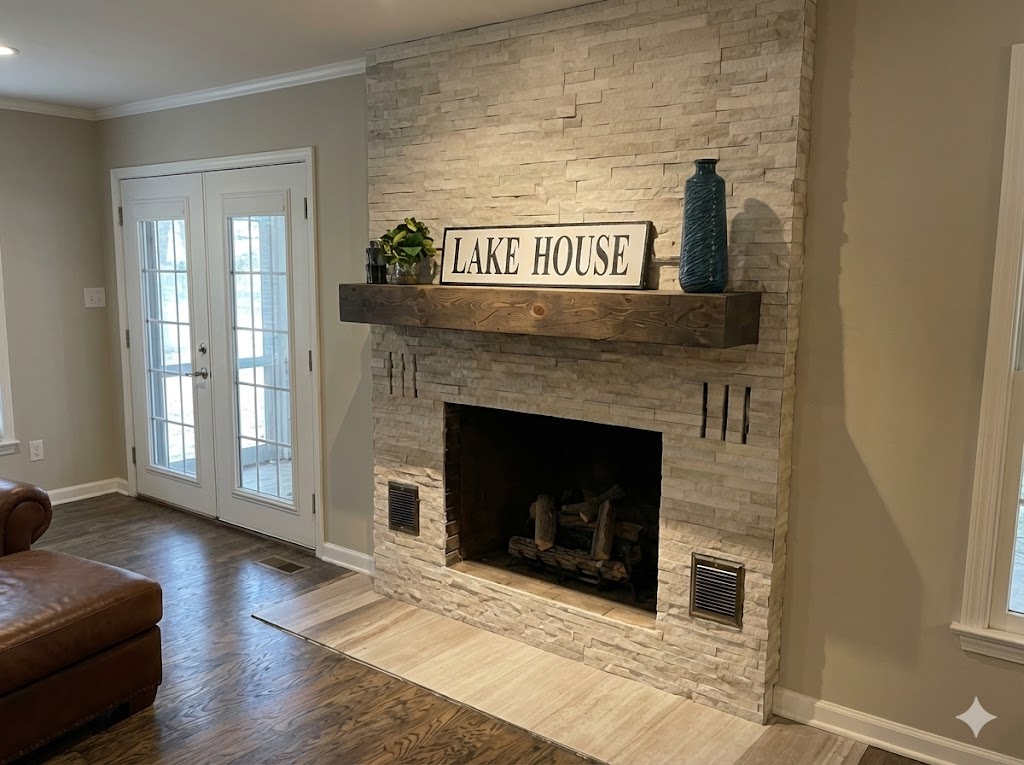
Fireplaces
Fireplace Surround vs. Fireplace Feature Wall: What Is the Difference?
A fireplace surround and a fireplace feature wall are not the same project. This guide explains the difference between surround updates, hearth details, mantel areas, vertical feature walls, entertainment walls, and full-height fireplace tile installations so homeowners can understand the right scope before requesting a quote.
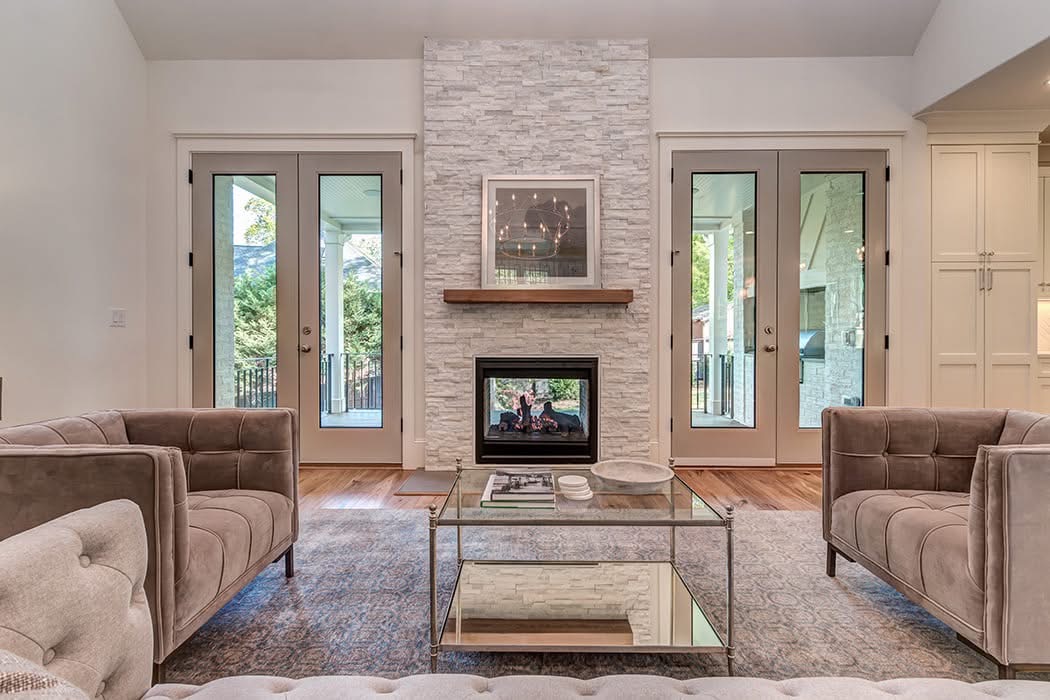
A fireplace surround and a fireplace feature wall are not the same project.
They may both involve tile, stone, or another surface finish, but the scope, planning, investment, and visual impact can be very different. A surround may be a focused update around the firebox. A feature wall may involve tile or surface material extending vertically, coordinating with a mantel, working around built-ins, or becoming the main focal point of the living room.
Before asking for a quote, it helps to know what level of fireplace upgrade you actually want.
For Charlotte-area homeowners planning a living room update, this distinction matters. It affects material selection, labor, prep work, layout planning, edge details, mantel coordination, and overall project cost.
Why Fireplace Scope Matters
A fireplace is usually one of the most visible parts of the living room.
It may sit in the center of the main wall, anchor a seating area, support a TV, connect with built-ins, or define the style of an open-concept living space. Because of that, the level of fireplace upgrade should match the room.
A small surround refresh can make an outdated fireplace feel cleaner and more current.
A full feature wall can make the fireplace feel custom, architectural, and more finished.
Both can be good choices. The right one depends on the room, the budget, the existing fireplace, and how much visual impact the homeowner wants.
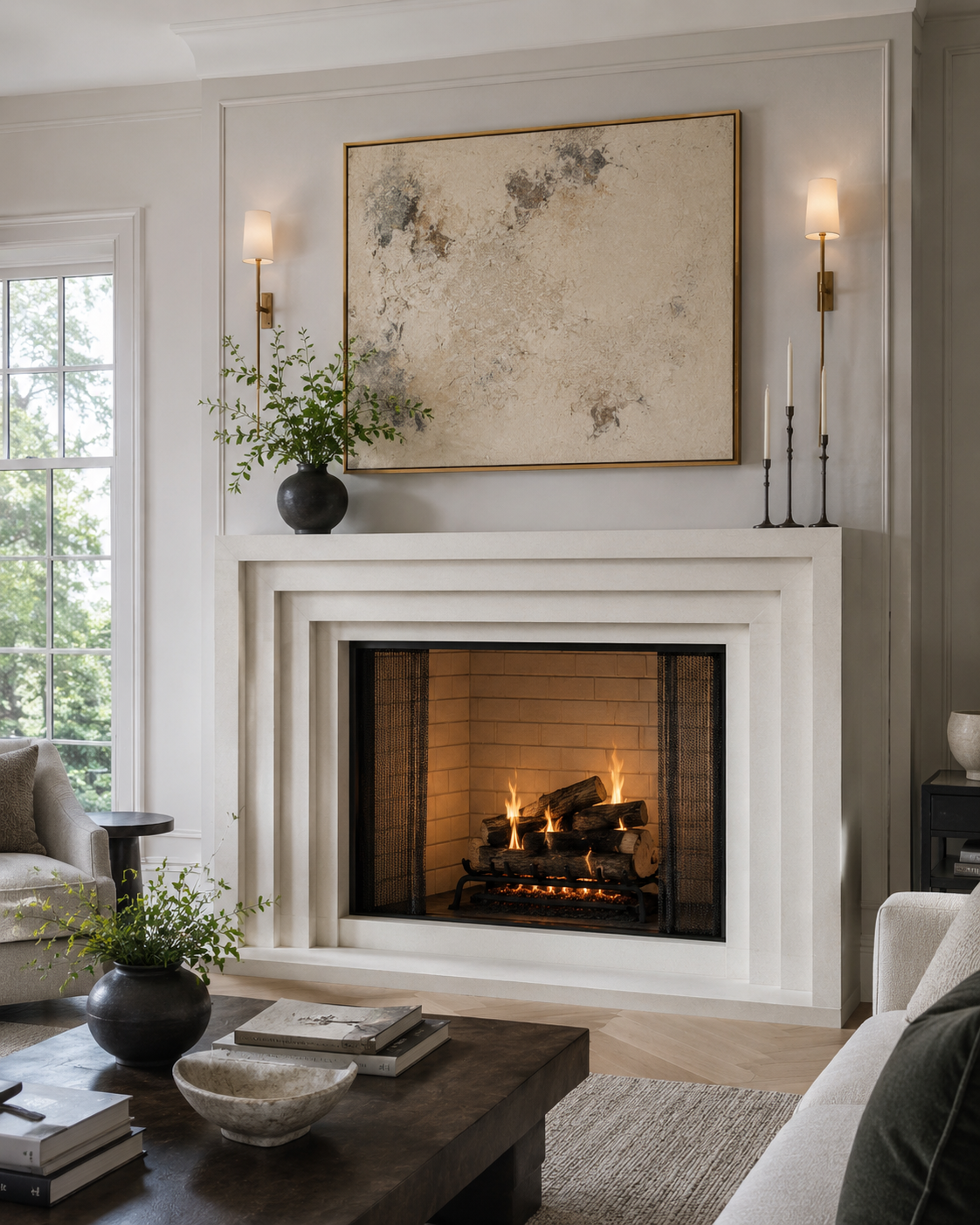
What Is a Fireplace Surround?
A fireplace surround is the finished area immediately around the firebox.
In most homes, the surround includes the tile, stone, or surface material framing the fireplace opening. It may be narrow and simple, or it may extend wider around the firebox depending on the design.
A fireplace surround may include:
- Tile around the firebox
- Stone around the fireplace opening
- A small vertical surface below the mantel
- Side returns
- Edge trim
- Firebox transitions
- A coordinated hearth
- Existing mantel coordination
A surround is usually more contained than a feature wall. It focuses on the fireplace opening rather than the entire wall.
This type of project is often a good fit when the homeowner wants the fireplace to look updated without turning the entire wall into a major design feature.
What Is a Fireplace Hearth?
The hearth is the horizontal area at the base of the fireplace.
Depending on the fireplace type and home design, the hearth may be flush with the floor, raised, extended into the room, or built as part of the surround. It may be tile, stone, slab material, brick, or another suitable surface.
A hearth can affect both design and scope.
Hearth work may include:
- Tiling the horizontal hearth surface
- Updating a raised hearth face
- Coordinating tile with flooring
- Creating a clean edge detail
- Matching or contrasting the surround
- Planning around fireplace requirements
- Repairing or preparing the existing surface
Even though the hearth may seem like a small area, it often has highly visible edges and transitions. If those details are not planned, the fireplace can feel unfinished.
A surround-only project and a surround-plus-hearth project are not always the same scope.
What Is the Mantel Area?
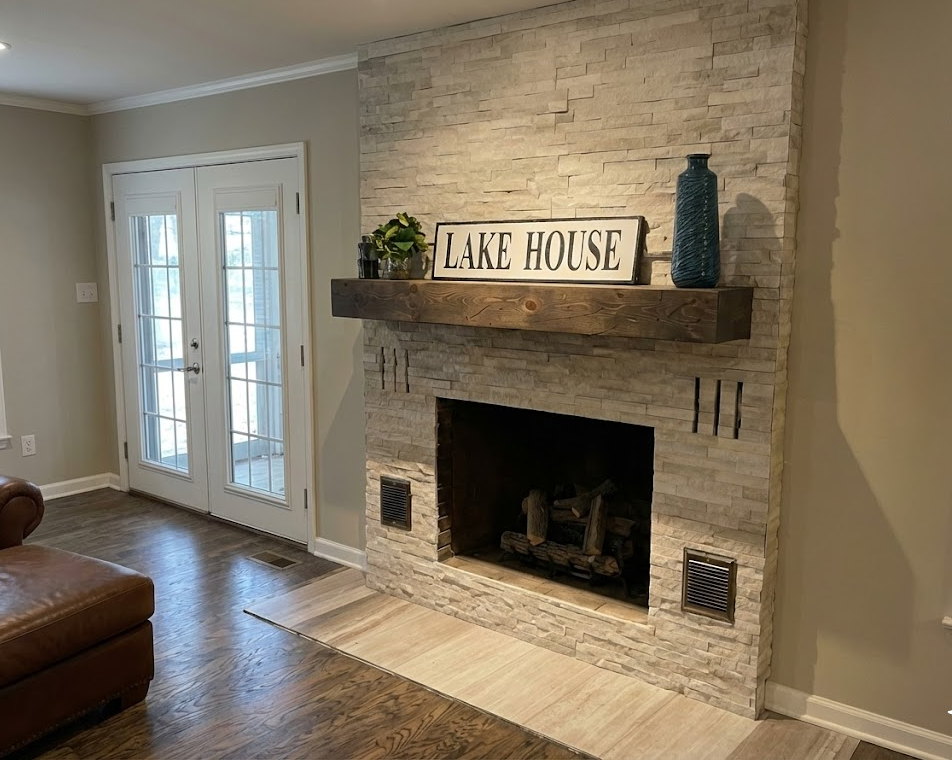
The mantel area refers to the zone above or around the fireplace where the mantel, floating shelf, trim, or decorative ledge sits.
Some fireplaces have a traditional mantel. Others have a floating shelf. Some modern fireplace walls have no mantel at all.
The mantel affects fireplace tile planning because it can determine where the tile stops, how high the material extends, and how the surround relates to the rest of the wall.
Mantel coordination may involve:
- Keeping the existing mantel
- Removing an old mantel
- Planning for a new mantel
- Coordinating with a floating shelf
- Tiling below the mantel only
- Tiling above and around the mantel
- Aligning tile with nearby trim or built-ins
- Reviewing fireplace clearance requirements
A mantel can make a fireplace feel traditional and grounded. Removing or simplifying the mantel can make the wall feel more modern. Either direction can work, but the tile scope needs to be planned around it.
What Is a Fireplace Feature Wall?
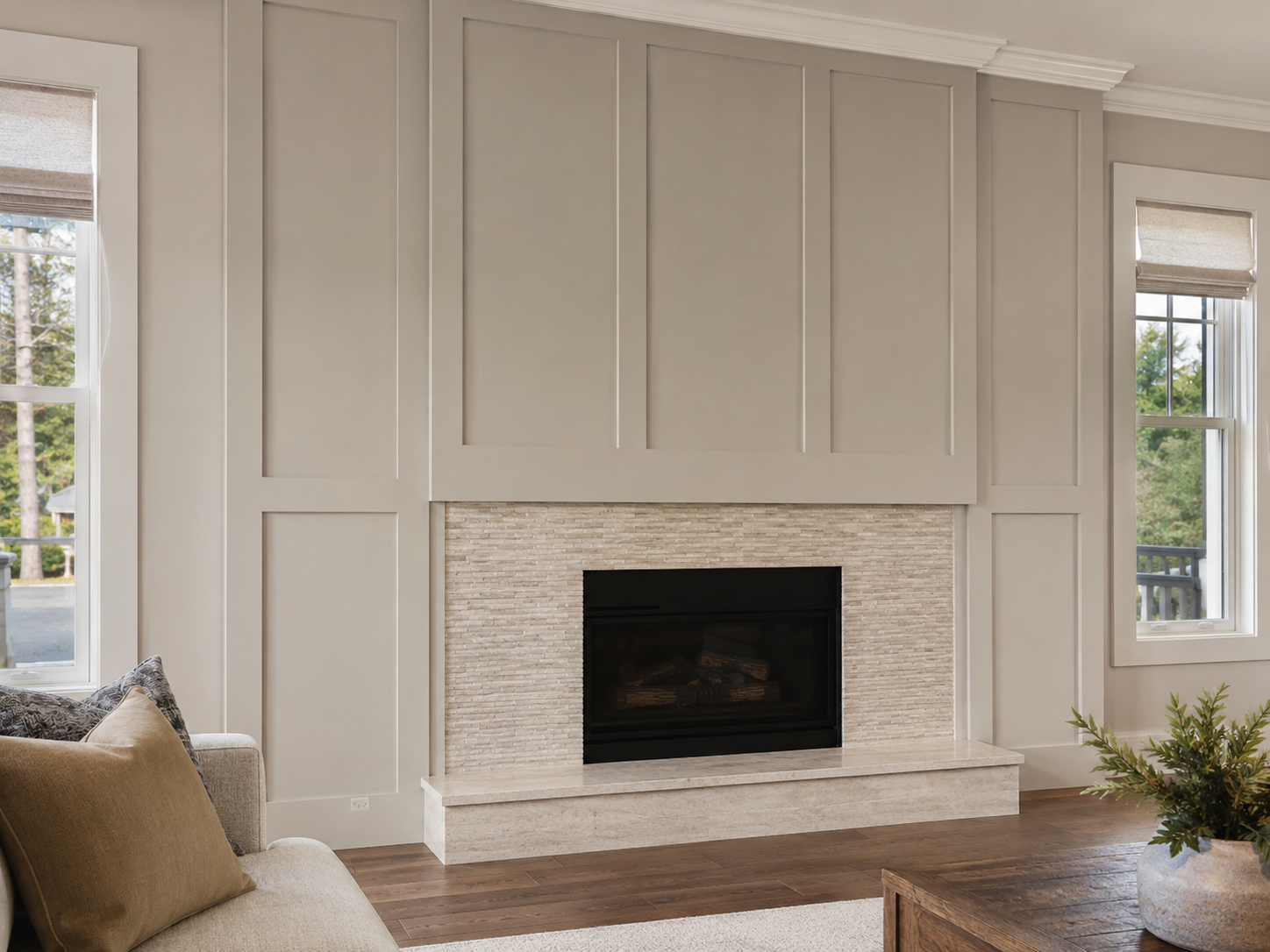
A fireplace feature wall is a larger fireplace design where the tile, stone, or finish material becomes part of the wall itself.
Instead of only updating the area around the firebox, a feature wall uses the fireplace as the center of a broader focal point.
A fireplace feature wall may include:
- Tile extending above the mantel
- Tile extending to the ceiling
- Large-format tile or stone panels
- A textured or fluted tile surface
- A full-height fireplace wall
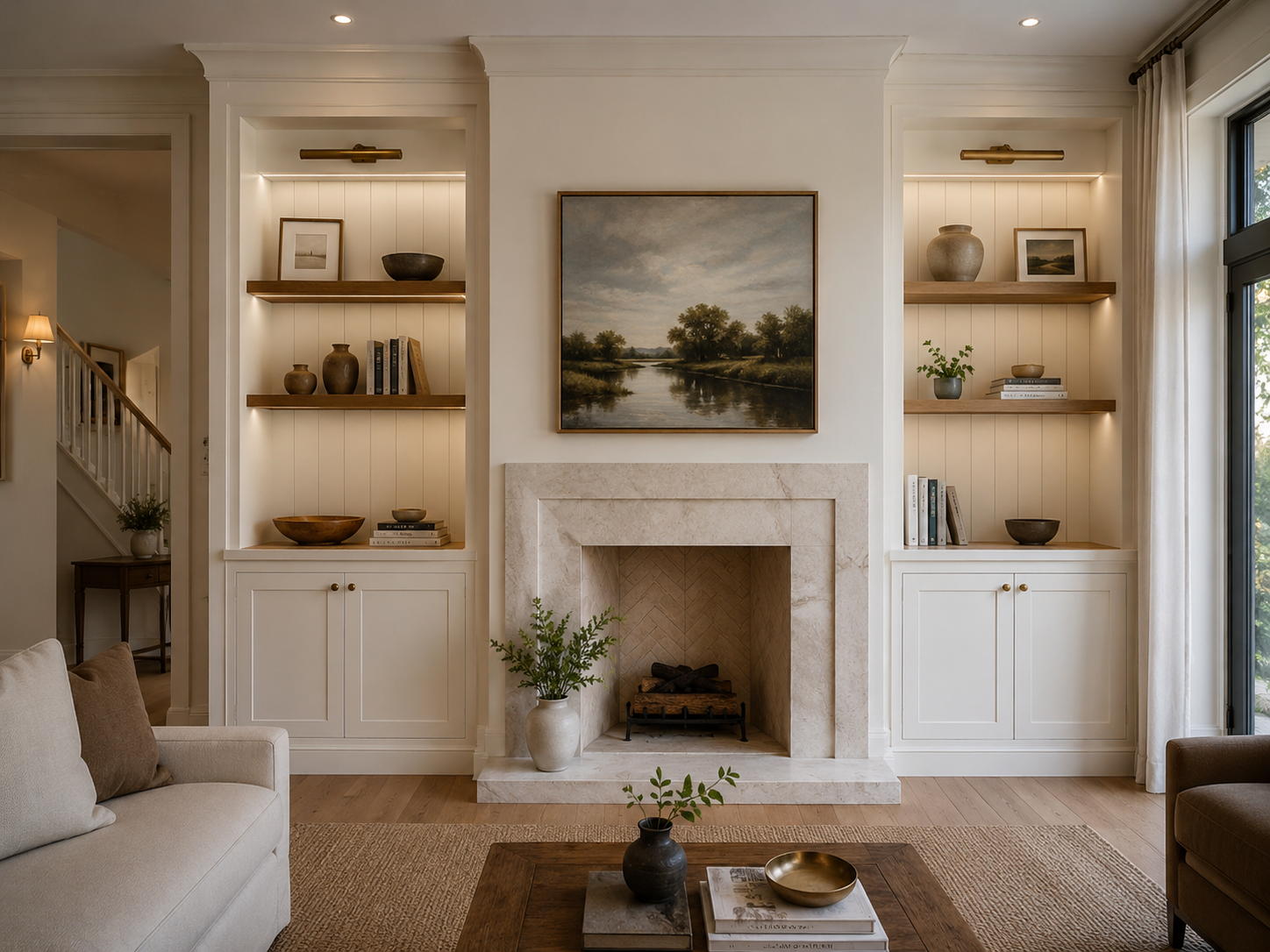
- Built-in shelving coordination
- Integrated mantel or floating shelf
- TV wall coordination
- Mixed materials
- Custom edge and trim details
A feature wall is usually a larger investment because it requires more material, more planning, more layout control, and more finish coordination.
It can also create a much stronger visual result.
What Is a Full-Height Fireplace Tile Installation?
A full-height fireplace tile installation means the tile or surface material extends vertically, often from the hearth or fireplace opening up toward the ceiling.
This type of design can make the room feel taller and more custom.
Full-height fireplace tile may be a good fit when:
- The ceiling height supports it
- The fireplace wall needs more presence
- The room lacks a focal point
- The homeowner wants a more custom living room
- The fireplace is visible from the kitchen or entry
- The tile material has enough scale to carry the wall
- Built-ins, a mantel, or a TV are being coordinated
Full-height tile requires careful proportion planning. The tile should relate to the firebox, ceiling height, wall width, mantel location, and surrounding surfaces.
When done well, a full-height fireplace wall can make the living room feel more complete. When poorly planned, it can feel too heavy, too narrow, or disconnected from the room.
What Is a Fireplace Entertainment Wall?
A fireplace entertainment wall combines the fireplace with additional living-room elements.
This may include a TV, built-ins, floating shelves, cabinetry, wall panels, lighting, or mixed materials. The fireplace tile becomes one part of a larger wall composition.
A fireplace entertainment wall may include:
- Fireplace tile or stone
- TV placement
- Media wiring coordination
- Built-in shelving
- Lower cabinets
- Floating shelves
- Mantel or no mantel
- Wood or panel details
- Mixed material transitions
- Custom finish edges
This is usually a more complex project than a basic surround or even a straightforward full-height tile wall.
The tile needs to work with everything around it. Wall width, TV height, built-in depth, shelf placement, firebox location, material thickness, and visible centerlines all matter.
A fireplace entertainment wall should feel integrated, not pieced together.
Surround vs. Feature Wall: The Main Difference
The simplest way to understand the difference is this:
A fireplace surround frames the fireplace opening.
A fireplace feature wall turns the fireplace wall into a focal point.
A surround is usually more contained. It may involve the tile or stone directly around the firebox and, in some cases, the hearth or mantel area.
A feature wall usually extends beyond the immediate firebox area and affects the room more broadly. It may continue vertically, involve built-ins, coordinate with a TV, or use a more substantial tile or stone layout.
The difference matters because the two projects have different planning needs.
A surround may focus on clean edges, updated material, and a polished firebox area.
A feature wall may require proportion planning, vertical layout, material scale, mantel coordination, architectural alignment, and multiple transition points.
When a Fireplace Surround Is the Better Choice
A fireplace surround may be the better choice when the homeowner wants a focused upgrade with a controlled scope.
This can be a strong option when:
- The existing fireplace layout works
- The mantel is staying
- The wall does not need major changes
- The room is smaller
- The homeowner wants an updated look without a dramatic feature
- The budget is more controlled
- The surrounding wall already has enough visual interest
- Built-ins or windows limit how much tile should be added
- The fireplace needs polish, not a full redesign
A fireplace surround can still feel high-end when the material, layout, grout, trim, hearth, and edge details are handled well.
A smaller project does not need to feel basic. It needs to feel finished.
When a Fireplace Feature Wall Is the Better Choice
A fireplace feature wall may be the better choice when the fireplace should become the main visual anchor of the room.
This can be a strong option when:
- The fireplace wall feels too plain
- The room lacks a clear focal point
- The ceiling height supports vertical design
- The fireplace is visible from multiple areas
- The homeowner wants a more custom living room
- The existing fireplace feels too small for the wall
- A TV, built-ins, or floating shelves are part of the plan
- The tile material needs more surface area to have impact
- The homeowner wants a premium focal-point finish
A feature wall can make the living room feel more complete, but it also needs more planning.
The tile, firebox, mantel, hearth, TV, shelves, built-ins, and wall proportions all need to work together.
When a Full Feature Wall May Be Too Much
A full-height fireplace wall is not always the right answer.
It may feel too heavy if the room is small, the ceiling is low, the material is too dark, or the wall already has competing features. It may also feel unnecessary if the existing mantel and surround already give the room enough structure.
A larger fireplace project may not be the best fit when:
- The room is small and visually crowded
- The ceiling height does not support a tall feature
- The tile material is too busy
- The fireplace wall already has built-ins or windows
- The homeowner wants a more traditional look
- The budget does not support the larger scope
- The existing fireplace only needs a clean refresh
Premium design is not always about adding more material. Sometimes the better choice is a focused surround with strong execution.
How the Hearth Changes the Project Scope
The hearth can make a fireplace project more involved than expected.
A surround-only project may be limited to the vertical tile around the firebox. Once the hearth is included, the project may involve horizontal surfaces, floor transitions, raised edges, or additional material coordination.
Hearth details can affect:
- Material quantity
- Tile cuts
- Edge finishing
- Floor transitions
- Firebox alignment
- Grout and caulk details
- Safety and clearance review
- Overall project labor
A hearth should not feel like a separate afterthought. It should coordinate with the surround or feature wall.
If the hearth is staying, the tile needs to work with it. If the hearth is changing, that needs to be included in the project scope.
How Mantels Affect Fireplace Scope
Mantels can define the entire fireplace design.
A traditional mantel may create a natural stopping point for tile. A floating mantel may allow tile to extend around or behind it. A no-mantel design may make the fireplace feel more modern and vertical.
Mantel decisions can affect:
- Tile height
- Layout centerlines
- Firebox proportions
- Edge details
- Material transitions
- Demolition needs
- Fireplace clearance considerations
- Final visual style
Mantels, shelving, cabinetry, and similar finish components are typically separate unless included in the written proposal. However, the tile work still needs to coordinate with them.
A fireplace surround or feature wall should be planned with the mantel decision in mind, not after it.
How Material Choice Changes the Scope
Material choice can push a fireplace project from simple to complex.
A straightforward ceramic or porcelain surround may be relatively controlled. Large-format tile, natural stone, stacked stone, fluted tile, slab-style panels, or mixed materials may require more planning, cutting, handling, and edge coordination.
Material choice affects:
- Installation time
- Layout planning
- Weight and handling
- Cutting difficulty
- Edge details
- Wall prep
- Grout visibility
- Waste allowance
- Maintenance expectations
- Finish transitions
This is why homeowners should decide both the project type and material direction before comparing estimates.
A small surround with a specialty material may be more involved than a larger surface with a simpler material.
How TV and Built-Ins Affect the Scope
A fireplace wall with a TV or built-ins is more than a tile surface.
The tile installation needs to relate to the other elements on the wall.
Important planning questions include:
- Is the TV staying above the fireplace?
- Is the TV being moved?
- Are built-ins already installed?
- Will cabinetry or shelving be added?
- How will the tile meet the built-ins?
- Will the mantel stay or change?
- Are there outlet or wiring considerations?
- Will the tile extend full height?
- Are multiple materials being combined?
These details can move the project toward a feature wall or entertainment wall scope.
The more elements that are involved, the more important coordination becomes.
How Cost Differs Between a Surround and Feature Wall
A fireplace surround is usually a more controlled investment because it involves a smaller, more defined area.
A feature wall usually costs more because it can include more surface area, more material, more prep, more layout planning, more edge details, more height, and more coordination with surrounding elements.
Cost differences may come from:
- Wall height
- Surface area
- Tile or stone material
- Demo needs
- Substrate prep
- Hearth work
- Mantel coordination
- Built-ins or shelving
- TV coordination
- Large-format material handling
- Edge and trim details
- Layout complexity
- Access
- Finish level
This is why homeowners should define the scope before asking for a price.
A quote for a surround refresh should not be compared directly to a quote for a full-height feature wall. They are different projects. For pricing context, see fireplace tile installation cost.
Common Scope Mistakes Homeowners Make
Many fireplace quote issues happen because the scope is unclear.
Common mistakes include:
- Asking for a fireplace quote without defining surround vs. feature wall
- Assuming the hearth is included
- Forgetting about mantel coordination
- Not mentioning TV or built-in plans
- Choosing tile before deciding how far it will extend
- Assuming a full-height wall is always better
- Comparing quotes for different scopes
- Not accounting for demo or surface prep
- Ignoring edge and trim details
- Choosing a material that does not fit the room scale
Clarity before the estimate helps prevent confusion later.
The better the scope is defined, the easier it is to compare options fairly.
Questions to Answer Before Requesting a Quote
Before requesting a fireplace tile estimate, homeowners should think through a few key questions.
Helpful questions include:
- Do you want a surround only or a full feature wall?
- Is the hearth staying or changing?
- Is the mantel staying, being removed, or being replaced?
- Will a TV be above or near the fireplace?
- Are built-ins or shelves involved?
- How high should the tile go?
- Is the existing tile, brick, or stone being removed?
- What material style are you considering?
- Do you want the fireplace to feel subtle or dramatic?
- Should the fireplace match a traditional, transitional, modern, or organic style?
- Are there any fireplace manufacturer requirements to consider?
These answers help determine whether the project is a focused surround refresh, a standard upgrade, an enhanced feature, or a larger signature fireplace wall.
How CBC Helps Define Fireplace Scope
CBC helps homeowners clarify fireplace scope before the project begins.
That means reviewing more than the visible firebox area. The surrounding wall, hearth, mantel, ceiling height, built-ins, TV placement, material direction, edge details, and finish goals all matter.
CBC can help homeowners evaluate:
- Surround vs. feature wall
- Hearth inclusion
- Mantel coordination
- Full-height tile options
- Entertainment-wall considerations
- Tile or stone material
- Layout direction
- Grout and trim details
- Surface prep needs
- Fireplace requirements
- Overall project scope
The goal is to match the project level to the room.
Some homes need a clean surround update. Others need a full focal wall. Some need a coordinated entertainment wall. The right scope is the one that makes the fireplace feel intentional without overbuilding the design.
Explore fireplace tile services to review scope and project direction. View completed fireplace and tile projects for reference. For design inspiration, see fireplace tile ideas for a finished living room. For finish quality, see what makes a tile installation look high-end.
Final Takeaway
A fireplace surround and a fireplace feature wall are different types of projects.
A surround frames the firebox and creates a more focused update. A hearth adds horizontal surface and transition details. A mantel affects tile height, proportions, and finish coordination. A full-height fireplace tile installation adds vertical presence. A feature wall turns the fireplace into a larger focal point. An entertainment wall combines tile with TVs, built-ins, shelving, cabinetry, or mixed materials.
Before requesting a quote, know what level of fireplace upgrade you want.
That clarity helps you compare pricing, choose the right material, understand the scope, and plan a fireplace that feels finished instead of accidental.
Not Sure What Level of Fireplace Upgrade You Need?
CBC helps homeowners define the right fireplace scope before the project begins, from focused surround updates to full-height feature walls and entertainment-wall finishes.
Request a fireplace tile estimate to review your fireplace, room layout, material direction, and project goals.
FAQ
What is the difference between a fireplace surround and a fireplace feature wall?
A fireplace surround is the finished area directly around the firebox. A fireplace feature wall extends beyond the immediate surround and turns the fireplace wall into a larger focal point, often with full-height tile, built-ins, a mantel, a TV, or mixed materials.
Is a fireplace surround cheaper than a feature wall?
Usually, yes. A surround is often a more contained project with less surface area and fewer coordination details. A feature wall typically involves more material, more height, more layout planning, more edge details, and more coordination with mantels, built-ins, shelves, or TVs.
Does the hearth count as part of the fireplace surround?
Sometimes. The hearth may be included in the fireplace scope, but it should be clarified before the project begins. Hearth work can add tile cuts, edge details, floor transitions, and additional material coordination.
Should fireplace tile go to the ceiling?
It depends on the room. Full-height fireplace tile can make a living room feel taller and more custom, but it is not always necessary. A smaller surround may be better for traditional rooms, smaller spaces, or fireplaces that only need a focused update.
What should I decide before requesting a fireplace tile quote?
Before requesting a quote, decide whether you want a surround or feature wall, whether the hearth and mantel are changing, whether a TV or built-ins are involved, how high the tile should go, and what material direction you are considering.