Pricing and Planning
How to Compare Tile Contractor Quotes Without Choosing the Wrong Installer
The cheapest tile quote is not always the most complete quote. This guide explains how homeowners should compare tile contractor estimates by scope, prep work, materials, layout, grout, edge details, demo, cleanup, timeline, warranty language, and portfolio proof.
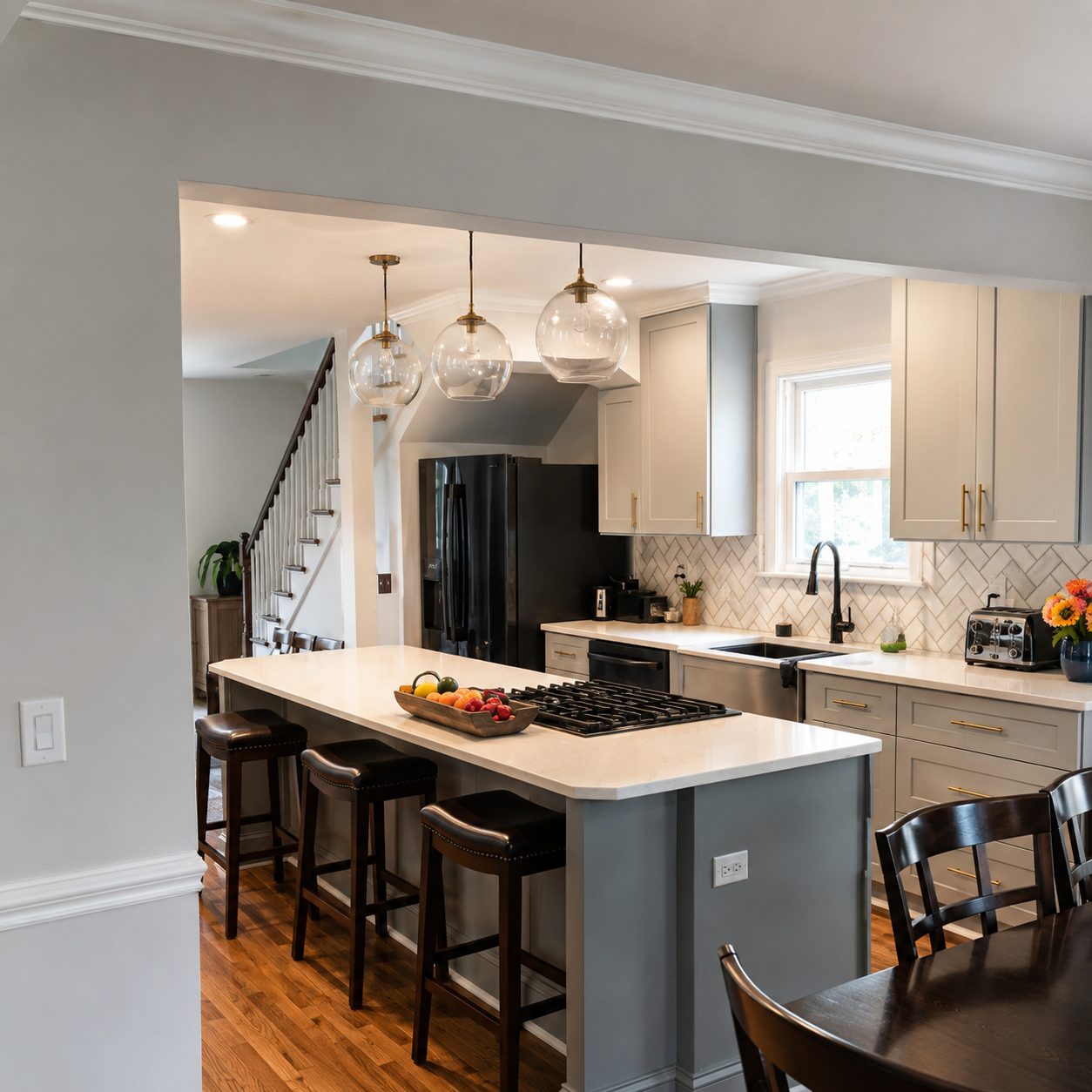
The cheapest tile quote is not always the most complete quote.
For many homeowners, comparing tile contractor estimates can be confusing. One installer may give a quick number. Another may provide a more detailed scope. One quote may include prep, materials, trim, grout, cleanup, and project protection. Another may leave those items vague or separate.
On paper, the lower quote can look appealing. In reality, it may not include the same work.
That is why homeowners should compare tile quotes by scope, not just price.
Whether you are planning a kitchen backsplash, fireplace tile project, shower tile upgrade, bathroom floor, or feature wall, the right installer should be able to explain what is included, what is not included, what conditions could affect pricing, and how the finished result will be handled.
For Charlotte-area homeowners comparing tile contractors, a clear estimate is one of the first signs of a professional process.
Why Tile Quotes Can Vary So Much
Tile projects are not all priced the same way.
A small backsplash with a simple layout is very different from a herringbone backsplash with removal, outlet cuts, specialty trim, and wall repair. A fireplace surround is different from a full-height fireplace feature wall. A shower tile project is different from a decorative tile wall because waterproofing, slope, substrate, and long-term performance matter.
Tile quotes can vary because of:
- Project size
- Surface condition
- Existing material removal
- Tile material
- Tile size
- Pattern complexity
- Layout planning
- Wall or floor preparation
- Waterproofing needs
- Grout selection
- Edge trim
- Outlet or fixture cuts
- Hearth or mantel details
- Cleanup and protection
- Timeline expectations
- Warranty or workmanship language
- Overall level of finish
A quote should reflect the real project, not just the square footage.
If one contractor is pricing the complete scope and another is pricing only basic labor, the numbers will not compare fairly.
Compare Scope Before You Compare Price
The first question is not "Which quote is cheaper?"
The first question is "Are these quotes pricing the same project?"
A clear tile quote should define the scope. That means the homeowner should be able to understand what surface is being tiled, what preparation is included, what materials are assumed, and what finished details are part of the work.
A strong scope may clarify:
- What areas are included
- Approximate square footage or project dimensions
- Whether removal or demolition is included
- Whether wall or floor prep is included
- What tile layout is being priced
- Whether grout is included or separate
- Whether trim, edging, or profiles are included
- Whether waterproofing is included for wet areas
- Whether cleanup and protection are included
- What items are excluded
- What conditions could change the final price
A vague quote leaves too much room for misunderstanding.
A complete quote should make the homeowner more confident, not more confused.
Surface Preparation Should Be Clearly Addressed
Prep work is one of the easiest items to overlook when comparing tile estimates.
It is also one of the most important.
Tile needs a suitable surface. If the wall or floor is damaged, uneven, dirty, poorly patched, or covered with old adhesive, the finished tile may not look or perform the way it should.
Surface prep may include:
- Removing old tile
- Scraping adhesive residue
- Repairing drywall
- Flattening uneven areas
- Cleaning the surface
- Preparing backer board or substrate
- Addressing floor transitions
- Reviewing wet-area conditions
- Confirming the surface is ready for the selected material
A lower quote may look better because it assumes the surface is already ready. Another quote may be higher because it accounts for necessary prep.
Those are not the same scope.
Before choosing a contractor, homeowners should ask what preparation is included and what happens if hidden conditions are found after removal begins.
Material Assumptions Matter
Tile material affects installation complexity.
A quote for simple ceramic tile is not the same as a quote for marble, glass tile, handmade tile, zellige-style tile, large-format porcelain, mosaics, natural stone, or stacked stone.
Different materials may require different handling, cutting, layout planning, grout selection, sealing considerations, edge details, and installation time.
Material can affect:
- Cutting difficulty
- Layout planning
- Edge finishing
- Grout joint size
- Material waste
- Surface prep
- Setting materials
- Installation pace
- Maintenance expectations
If the tile has not been selected yet, the quote should make that clear.
For example, a contractor may price a backsplash based on standard ceramic or porcelain tile. If the homeowner later selects marble mosaic or herringbone handmade tile, the scope may change.
A good estimate should explain the material assumption behind the number.
Layout Complexity Should Be Priced Correctly
The tile layout affects both the appearance and the labor.
A straight stack or running bond backsplash may be relatively straightforward. Herringbone, chevron, diagonal layouts, basket weave, mosaics, picture-frame details, large-format tile, and custom feature areas usually require more layout planning and more cuts.
For fireplaces, a simple surround is very different from a full-height feature wall with large-format panels, hearth detail, mantel coordination, or built-ins.
For showers, the layout may involve niches, curbs, benches, plumbing fixtures, movement joints, and slope considerations.
Layout complexity can affect:
- Planning time
- Cut quantity
- Alignment control
- Grout-line visibility
- Material waste
- Installation time
- Outlet or fixture coordination
- Edge and trim detail
- Final appearance
Homeowners should confirm that the quote reflects the actual layout they want.
If a quote assumes a standard pattern, it should not be compared directly to a quote that includes a more detailed design.
Grout Should Not Be an Afterthought
Grout affects the finished appearance, maintenance, and sometimes the project scope.
A tile quote should clarify whether grout is included, whether grout material is purchased separately, and whether the grout color will be reviewed before installation.
Grout decisions matter because they affect:
- Pattern visibility
- Warmth or coolness
- Contrast
- Maintenance expectations
- Joint size
- Final design appearance
- How clean the installation feels
For showers and wet areas, grout also becomes part of the maintenance conversation.
If grout is not discussed until the last minute, the finished result may not match what the homeowner expected.
A complete contractor quote does not need to overcomplicate grout, but it should not ignore it either. For more direction, see how to choose the right grout color.
Edge Details and Trim Should Be Included in the Conversation
Tile has to end somewhere.
That ending point can make or break the finished look.
Edges may appear at:
- Backsplash ends
- Open walls
- Cabinet lines
- Window trim
- Fireplace returns
- Shower niches
- Outside corners
- Tub surrounds
- Bathroom floors
- Tile-to-drywall transitions
- Tile-to-floor transitions
Edge details may require:
- Metal trim profiles
- Bullnose tile
- Finished tile edges
- Mitered corners when appropriate
- Caulked transitions
- Thresholds
- Stone caps
- Custom stopping points
If one quote includes trim planning and another ignores it, the quotes are not equal.
Edge details may seem small on paper, but they are highly visible once the project is complete.
A polished tile project should not leave exposed edges, awkward endings, or unfinished transitions. For more on finish quality, see what makes a tile installation look high-end.
Demo and Removal Should Be Clear
Many tile projects begin with removing something that is already there.
That could be an existing backsplash, fireplace surround, bathroom floor, shower tile, stone, brick, or other surface finish.
Removal can affect cost because the condition underneath is not always known until the existing material is removed.
Demo may involve:
- Tile removal
- Adhesive removal
- Drywall repair
- Backer board removal
- Dust control
- Debris handling
- Surface correction
- Protection of surrounding finishes
A quote should clarify whether demo is included or separate.
If a contractor gives a low installation price but leaves removal vague, the final project cost may increase later. Homeowners should know whether the quote reflects the full project or only the new tile installation.
Cleanup and Home Protection Matter
Tile installation happens inside a finished home.
That means the contractor should account for protection and cleanup, not just tile setting.
Home protection may include:
- Dust-control preparation
- Countertop protection
- Floor protection
- Cabinet protection
- Care around appliances
- Care around furniture
- Controlled work areas
- Debris removal
- Final cleanup
A professional tile project should respect the home during the process.
This is especially important for homeowners living in the home during the project. A lower quote that ignores protection and cleanup may feel less expensive at first, but it can create frustration during and after the work.
The installation experience matters, not only the finished photo.
Timeline Should Be Realistic
A tile estimate should give a reasonable sense of timing.
Some projects are simple and can move quickly. Others need multiple phases, drying or cure time, material coordination, demo, prep, waterproofing, grout, cleanup, or return visits.
Timeline can be affected by:
- Material availability
- Existing surface removal
- Surface prep
- Layout complexity
- Shower waterproofing
- Grout and curing requirements
- Fireplace height or access
- Specialty materials
- Other trades
- Homeowner decisions
A contractor who promises an unusually fast timeline may not be allowing enough time for prep, layout, finish details, or product requirements.
A realistic schedule is part of professional project management.
Homeowners should ask what the timeline includes and whether any steps require drying time, inspection, coordination, or follow-up.
Warranty Language and Workmanship Expectations Should Be Understandable
Warranty language can vary by contractor.
Some estimates include clear workmanship language. Others do not explain what happens if there is a concern after the project is complete.
Homeowners should review:
- What workmanship is covered
- What materials are covered by manufacturer warranties
- What maintenance is the homeowner's responsibility
- What is excluded
- How concerns should be reported
- Whether wet-area work has special conditions
- Whether cracks, movement, settlement, or substrate issues are addressed
- Whether the warranty is written or verbal
A tile contractor should not overpromise, but the expectations should be clear.
This is especially important for showers, floors, fireplaces, and larger feature installations where substrate, movement, materials, and use conditions matter.
Clear warranty language helps prevent confusion after the project is finished.
Portfolio Proof Matters
Before hiring a tile installer, homeowners should look closely at finished work.
Do not only look at the wide-angle photo.
Look at the details.
A strong portfolio should show:
- Clean grout lines
- Balanced layouts
- Clean cuts
- Finished edges
- Good outlet coordination
- Well-planned corners
- Clean transitions
- Fireplace alignment
- Shower niche detail
- Bathroom floor transitions
- Backsplash stopping points
- Overall consistency
Photos should help the homeowner understand the level of finish the contractor produces.
A contractor who only shows distant photos may not be showing the details that matter most. Tile quality is often visible in the close-up work.
Portfolio proof is especially important when comparing a premium quote to a lower quote. The homeowner should be able to see the difference in execution. View completed tile projects for reference.
Communication Is Part of the Quote
A contractor's communication before the project often predicts the experience during the project.
A professional installer should be able to explain the scope, process, assumptions, and concerns clearly.
Good communication may include:
- Asking about project goals
- Reviewing photos or site conditions
- Explaining what is included
- Clarifying what is separate
- Discussing material assumptions
- Identifying potential scope changes
- Explaining layout or finish details
- Providing a written proposal
- Setting realistic expectations
If the quoting process feels rushed, vague, or dismissive, the project may feel that way too.
The estimate is not only a number. It is the first look at how the contractor thinks.
Warning Signs in a Tile Contractor Quote
Not every low quote is a bad quote, and not every high quote is automatically better.
The issue is whether the quote is complete and clear.
Warning signs may include:
- No written scope
- No mention of prep work
- No discussion of material type
- No layout assumptions
- No explanation of trim or edges
- No clarity on grout
- No mention of demo or removal
- No protection or cleanup details
- No timeline expectations
- No portfolio proof
- Vague warranty language
- Pressure to decide quickly
- Dismissing homeowner questions
- Pricing complex work like a simple install
A quote should leave the homeowner with fewer questions, not more.
If important details are missing, ask before signing.
Why the Cheapest Quote Can Become More Expensive
A low quote can become more expensive if important items were not included.
Common missing items include:
- Demo
- Wall repair
- Surface prep
- Waterproofing
- Edge trim
- Grout material
- Specialty setting materials
- Complex layout labor
- Outlet cuts
- Hearth details
- Mantel coordination
- Cleanup
- Return visits
- Correction work
A low number may also lead to compromise if the installer rushes planning, uses poor edge details, skips prep, or does not account for material complexity.
The issue is not that homeowners should always choose the highest quote.
The issue is that homeowners should understand what each quote actually includes.
A complete quote may look higher because it is pricing the full project. An incomplete quote may look lower because the missing pieces have not been addressed yet.
How to Compare Quotes Fairly
To compare tile quotes fairly, homeowners should organize the information by category.
Ask each contractor to clarify:
- What surfaces are included?
- What demolition is included?
- What prep work is included?
- What tile material is assumed?
- What layout or pattern is included?
- Is grout included or separate?
- Is trim or edging included?
- Are specialty materials included?
- Are outlets, fixtures, niches, hearths, or corners included?
- How will the home be protected?
- What cleanup is included?
- What timeline is expected?
- What warranty or workmanship language is provided?
- What project conditions could change the price?
Once those details are clear, price comparison becomes more useful.
The cheapest quote may still be the right fit for a simple project, but only if the scope is complete and the installer can produce the quality the homeowner expects.
Questions to Ask Before Hiring a Tile Contractor
Before choosing an installer, ask direct questions.
Helpful questions include:
- Have you installed this type of tile before?
- How will the layout be planned?
- What surface prep is included?
- What happens if the existing wall or floor is damaged?
- Is demo included?
- Are grout and trim included?
- How are exposed edges finished?
- How are outlets, niches, fixtures, or corners handled?
- What protection is used in the home?
- How long should the project take?
- What could change the price?
- Can I see examples of similar work?
- What warranty or workmanship expectations are included?
The answers should be understandable.
A strong contractor does not need to make the process complicated, but they should be able to explain the details that affect the result.
How CBC Approaches Tile Estimates
CBC competes on process, detail, and professionalism — not on being the cheapest number in the pile.
That means a CBC estimate is intended to help homeowners understand the actual project scope: what is being installed, what preparation may be needed, how the material affects the work, what layout complexity is involved, and what finish details need to be planned.
For a backsplash, that may include outlet cuts, edge trim, range-wall layout, grout color, and wall prep.
For a fireplace, that may include surface area, hearth details, mantel coordination, material handling, and feature-wall scope.
For select bathroom work, that may include wet-area considerations, substrate prep, niches, floor transitions, edge details, and grout planning.
The goal is to price the project in a way that reflects the work required to deliver a clean, finished result.
CBC is not the right fit for every homeowner looking for the lowest possible tile price. CBC is a better fit for homeowners who want the installation planned carefully, communicated clearly, and finished with attention to detail.
Learn more about CBC's approach, understand CBC's tile project process, and review backsplash installation services, fireplace tile services, and select bathroom tile upgrades. For planning context, see common backsplash installation mistakes and kitchen backsplash cost in the Charlotte area.
Final Takeaway
Comparing tile contractor quotes is not only about finding the lowest price.
It is about understanding what each quote includes.
A complete tile estimate should clarify scope, prep work, material assumptions, layout complexity, grout, trim, edge details, demo, cleanup, timeline, warranty language, and portfolio proof.
If those details are missing, the price may not tell the full story.
The cheapest quote is not always the wrong choice, but it is not automatically the best value either. The best quote is the one that clearly matches the project, the material, the level of finish, and the result the homeowner expects to see every day.
Before hiring a tile contractor, compare the full scope — not just the number.
Comparing Tile Quotes for Your Home?
CBC helps homeowners understand tile project scope, prep needs, layout complexity, material considerations, and finish details before work begins.
Request a tile estimate to compare your project clearly and plan the right level of installation.
FAQ
How should I compare tile contractor quotes?
Compare the full scope, not just the final price. Look at prep work, material assumptions, layout complexity, grout, trim, edge details, demo, cleanup, timeline, warranty language, and examples of past work.
Why are tile installation quotes so different?
Tile quotes vary because projects can include different levels of prep, demolition, material handling, layout planning, edge detail, waterproofing, cleanup, and finish quality. Two quotes may not be pricing the same scope.
Is the cheapest tile quote always a bad choice?
No. A lower quote may be appropriate for a simple project with limited complexity. The concern is when a low quote leaves out important scope items or does not account for prep, layout, trim, grout, removal, or finish details.
What should be included in a tile installation estimate?
A tile estimate should explain the surfaces included, prep work, demolition, material assumptions, layout, grout, trim or edging, cleanup, timeline, exclusions, and any conditions that could affect pricing.
Why does portfolio quality matter when hiring a tile installer?
Tile quality shows in the details. A portfolio can help homeowners evaluate grout lines, cuts, edges, transitions, layout balance, outlet coordination, fireplace alignment, shower niches, and overall finish quality before choosing an installer.